Sunday, 19 May 2024

Sunday May 19 - Morton Bagot (and a few other sites)

 I must admit that I have waited until today to add a post because birds have been hard to come by. Morton Bagot was visited today and had just about enough birds to be worth mentioning.

The highlight was a very good view of a fast moving Hobby, too fast for the camera but it was initially nice and close. The site remains a mecca for Whitethroats which seemed to be singing everywhere we went. We didn't log them, but there must have been over a dozen. Other warblers included two pairs of Willow Warblers, and two singing males each of Sedge Warbler, and Reed Warbler.

It's been a struggle to see Swift this year (I still haven't had one from the garden), but we did see two shortly after we arrived. A single male Stonechat was fly-catching from the reedbed. It was not the colour-ringed bird, so I'm guessing it is the bird from the ridge field. 

Stonechat

The rest of the story of today and the latter half of the week is very insecty.

Today, I photographed a new moth (although I didn't realise it at the time). A male long-horn moth in the hedge near the flash field turned out to be Lesser Banded Longhorn Adela croesella, and not the commoner N degeerella I had assumed it was.

Adela croesella

I realised what it was when checking the Field Guide at home, then my old photos of degeerella, then on-line photos and finally obsidentify (which I must admit only gave it 69%, but gave degeerella 31%). I'd be disappointed if I've got it wrong.

Other insects seen were much commoner and more familiar: Mother Shipton moth, and Broad-bodied Chasers were new for the year.

Mother Shipton

Broad-bodied Chaser

On Friday night I put my garden moth trap out and caught 42 moths of 29 species. These included my second ever Pine Hawk-moth and second Mottled Pug for the garden.

Pine Hawk-moth

Mottled Pug

Alder Moth (not annual in the garden)

The main talking point was a micro which I think was the very scarce Crassa tinctella. Views were sought, and although most were supportive there was sufficient uncertainty to render it necessary for a specimen to be taken.

Plain Bark Moth Crassa tinctella (confirmed by gen det)

I'll find out what it is early next year when the recorder does his rounds. He also thought it might be tinctella but was glad it can be checked. He told me he has nearly 1000 records of unitella and only three of tinctella.

PS: It was indeed Crassa tinctella.

Going back to last Thurday, I paid a visit to Windmill Naps Wood just south of the M42. Away from the motorway it was a very nice mature oak wood but contained no unexpected birds.

Roe Deer in the wood

I did have some interesting insects though. A micro moth was new to me, called The Minister by my latest moth guide, its latin name remains Eulia ministrana.

Eulia ministrana

Notocelia cynosbatella (Black Cloak) other names are available

A recent edition of the excellent Field Guide to the Micro-moths of Great Britain and Ireland is responsible for the addition of English names which often differ from previous on-line naming attempts. The confusion is a bit annoying.

Talking of new names for things, I also photographed a hoverfly which I was delighted to discover has been given the name Common Batman Fly because the pattern on its thorax is said to resemble the signal used to summon Batman.

Common Batman Fly

Hmm, yes I can just about see what they mean.


Wednesday, 15 May 2024

Tuesday May 14 - Mappleborough Green and the Arrow

 After steady overnight rain a cloudy dampish day was forecast, leaving me unsure where to go. I decided that Mappleborough Green was worth a look as it at least has some potential wader habitat.

Unfortunately its also very small, so I suspect most migrating waders just don't see it. There was virtually no change since my last visit. At least the three Little Ringed Plovers were still in residence, a couple of near-adult Mute Swans had turned up, and a Shelduck had made the short trip from Morton Bagot.

Little Ringed Plovers

I decided to drive to a bridge across the Arrow near Studley and explore that area. This at least brought a few surprises.

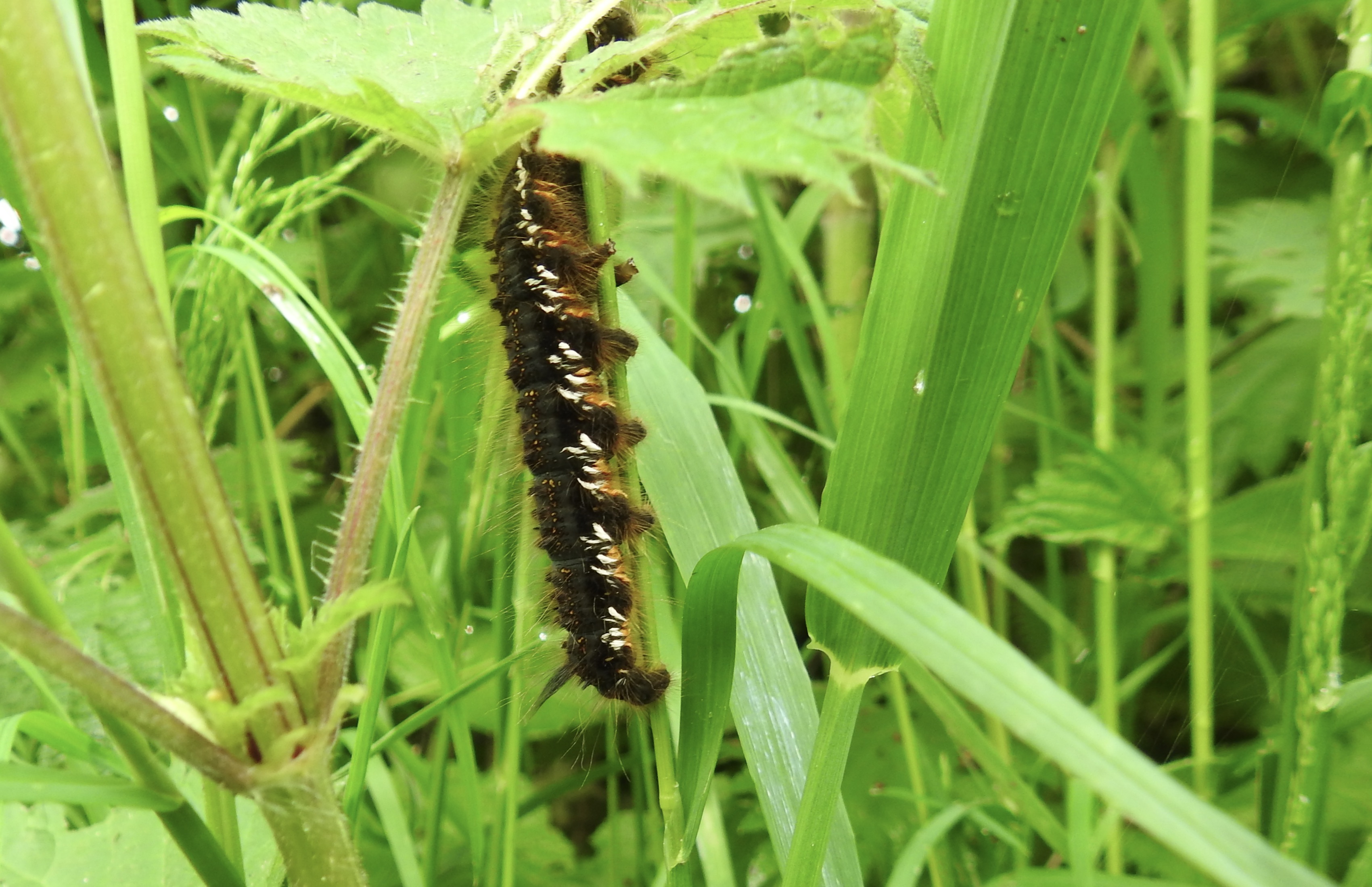
I'm used to searching for moths in the undergrowth, but rarely find caterpillars. Today however I was lucky and spotted a rather impressive one among the nettles munching away on the vegetation. Naturally I hadn't a clue what it was, but fortunately the obsidentify app on my phone pointed me to Drinker moth caterpillar. 

Drinker Moth caterpillar

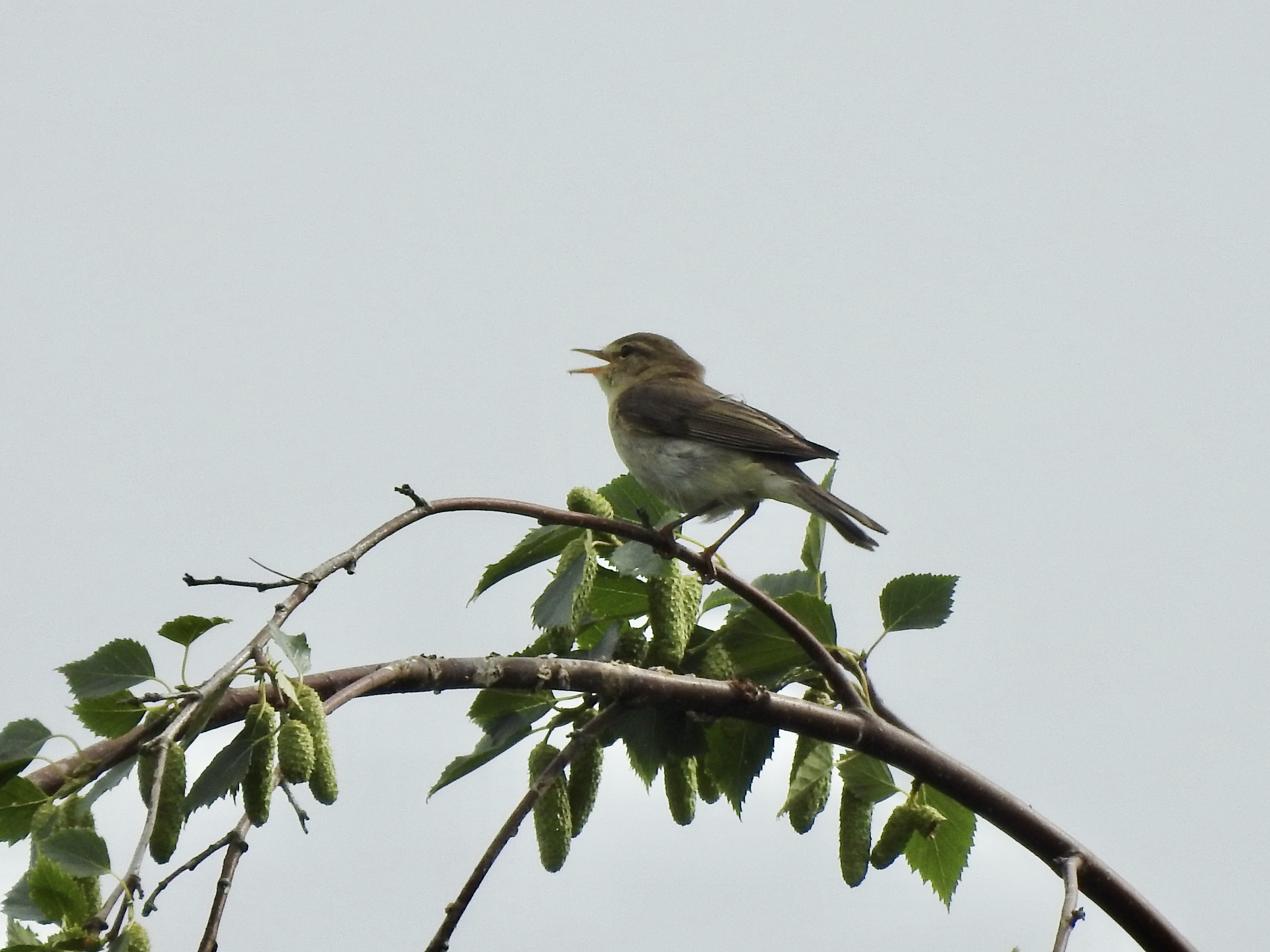
A nice selection of the usual warblers singing included Lesser Whitethroat, Whitethroat, Willow Warbler, Reed Warbler, and Cetti's Warbler. Most remained out of sight, but one Willow Warbler showed well.

Willow Warbler

I was also pleased to see a few Swifts. They seem to be scarcer than ever this year.

The highlight came as I peered up the river through the branches of the overhanging willows. A female Goosander was floating nervously, aware of my presence. This species seems to have colonised suitable rivers in the West Midlands, having previously been strictly a winter visitor. I suspect a breeding attempt was in progress but I could see no ducklings.

Goosander

The only way I could get a shot without alarming the bird was to zoom up to the maximum to eliminate the intervening leaves and stems. Unfortunately this also meant that the image was slightly out of focus (or more so than usual).

I gave the stretch of river it was on a wide berth, and don't think I disturbed the bird.

Finally, Mike Wakeman has kindly shared some of his local records stretching back to 1973, so I've added those to my History of the Circle page. Thanks mate.


Monday, 13 May 2024

Sunday May 12 - Morton Bagot (and more garden moths)

 So here we are, early May is turning towards mid May and most of the migrant birds are now settled down on their breeding grounds and not planning to move again until about August. As a result I should be suffering from writer's block.

The Sunday visit to Morton Bagot was predictably steady, adding just a briefly singing Reed Warbler to the year list and an ever so distant Hobby as bird of the day. Admittedly a pair of Avocets has reappeared along with a pair of Black-headed Gulls and a Little Egret, but that was about it.

Avocet and Little Egret

Thank goodness for insects. Just as the birdlife gets a bit blaah butterflies, moths, and dragonflies step up to do the heavy lifting.

New for the year were a Small Heath (possibly my earliest ever, but I've no intention of checking), numerous Azure Damselflies, a few Large Red Damselflies, and a Four-spotted Chaser.

Small Heath

An immature Azure Damselfly

Large Red Damselfly (male)

Four-spotted Chaser

All these insects appear in a predictable sequence through the summer ensuring that interested is maintained until about August (when the birds start migrating again). Hurrah.

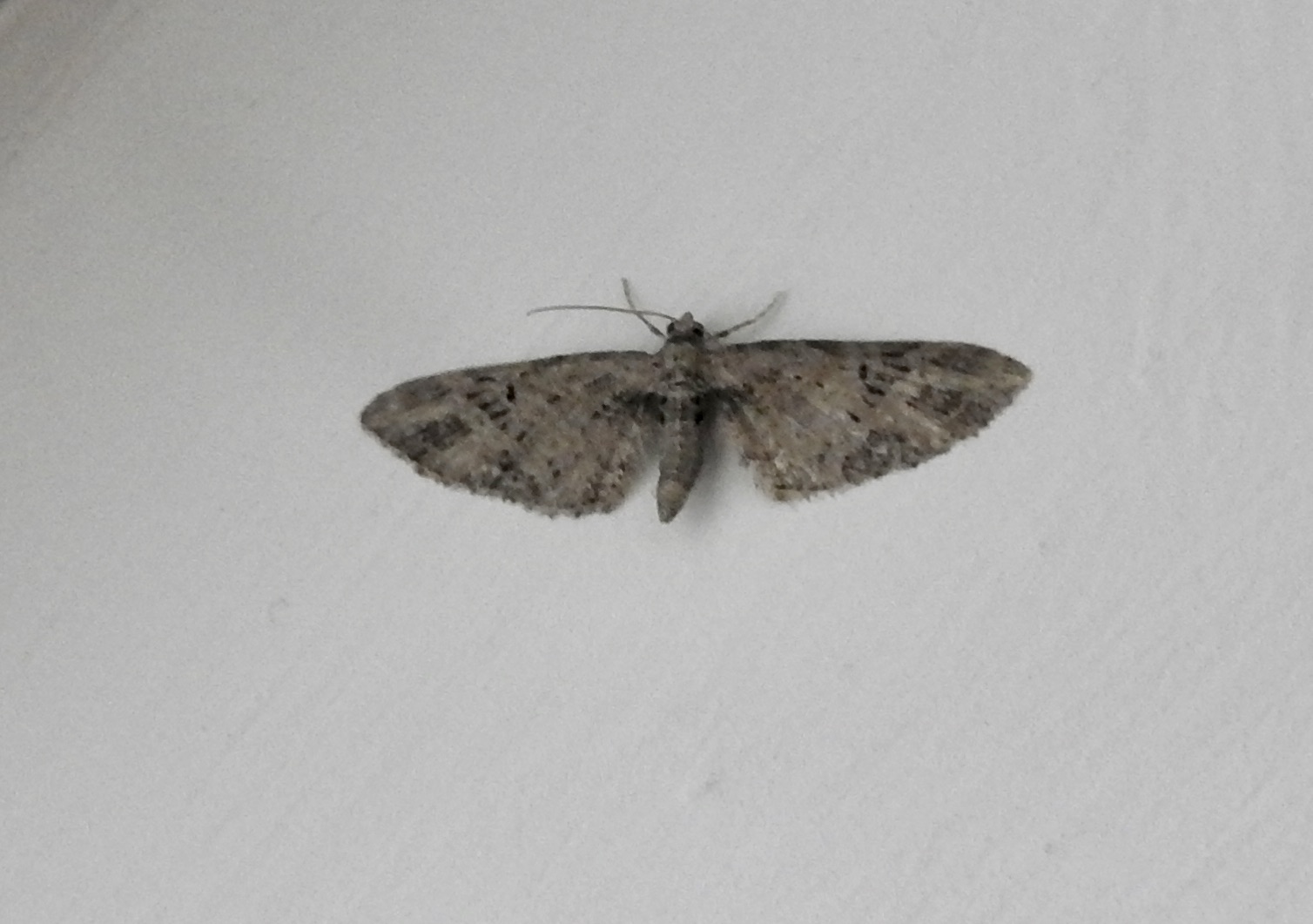
And then of course there are moths. About twenty to thirty species of dragonflies and butterflies, but 2000 species of moths, they are the gift that keeps on giving. At Morton Bagot on Sunday most moths are hidden away in daylight, but its still possible to disturb one or two micros. I added two to the year list Common Marble Celypha lacunana, and the tiny Cocksfoot Moth Glyphipterix simpliciella which I thought was going to be something new but was actually common and not even new for the site. However, I did pot a tiny little moth which I took home for further research and discovered it was new to me; a Speckled Grass-miner Elachista rufocinerea. 

Elachista rufocinerea

Incidentally, for micro moths the "English names" are a relatively new contrivance so most moth-ers don't know what you are talking about until you add the Latin name. That probably includes me.

Finally, to take advantage of the last of the warm spring weather I put my trap out in the garden and managed to attract 38 moths of 27 species. These included eight new for the year plus two which were lifers.

The latter were a Poplar Lutestring (the Warwickshire records are clustered around woodlands bordering Redditch), and a Scalloped Hazel, which the books suggest is common but experience tells me they avoid our garden.

Poplar Lutestring

Scalloped Hazel

The wind was south-easterly last night and our garden lies about half a mile north-west of a nice stand of Poplars. so there was a bit of a theme going with regard to some other less than frequently seen moths.

A Poplar Hawk-moth was my first since the council chopped down a circle of mature Poplars on an island which is slightly closer to us, so that's since 2019. A Poplar Kitten was only the second for the garden.

The enormously impressive Poplar Hawk-moth

Poplar Kitten

Another unusual visitor was my first Red Twin-spot Carpet since 2018, although strictly speaking it should be aggregated as Red/Dark Twin-spot Carpet as they can be indistinguishable. Dark Twin-spot is a lot rarer, and is usually in a dark patterned form.

Red/Dark Twin-spot Carpet

I could go on, but I think I'll stop there. Suffice to say it was another good moth night.

Friday, 10 May 2024

Friday May 10 - Woods, birds and especially moths

 Today's venue was the woods of the Ragley estate which spill into the southern edge of my recording circle. Specifically, Asplands Husk, Three Oak Hill Wood, and Coldcomfort Wood. A public footpath (and a road) borders Asplands Husk and runs through to Coldcomfort Wood. For the other one I had to tresspass, but was discovered and politely chucked off.

Coldcomfort Wood

To be fair to the woods' owners there was evidence that they were opening some of them up by judicial forest management, and they looked good for birds (if only you were allowed to roam). Their principle focus may be deer management though, as the gamekeeper I met was keen to explain.

I did see some decent birds. The best was a very distant Hobby, my first of the year. Other notables were singing Garden Warblers, Cuckoos (two), and a Lesser Whitethroat by the road. Unfortunately none of these presented a photo opportunity so I had to rely on a Skylark which landed on the footpath between the crops and was presumably trying to lead me away from a nearby nest.

Skylark

I thought I'd better get that in because the rest of the post concerns moths.

In Three Oak Hill Wood I stumbled across several Brown Silver-lines, a common woodland species which has yet to turn up in my garden, and also Common Carpet, with a Green Carpet at Asplands Husk. It's nice to see moths in their natural habitat rather than in and around a moth trap.

Brown Silver-line

However I cannot finish this post without mention an epic moth-trapping session in my garden on Wednesday night.

Normally in early May I barely get double-figures, but the warm weather of the last few days has made all the difference. I caught 59 moths of 23 species, of which 16 were new for the year and one was new for the garden (and also a lifer).

The new one was a Dewick's Plusia. This is a species which is expanding its range northwards after only being recorded in the UK for the first time in 1991. For the next twenty years it was regarded as a south coast migrant, but then started breeding and reached the West Midlands maybe five or so years ago. Apparently they can be attracted to a pheromone lure for a related species and are not particularly drawn to light. So I counted myself doubly lucky when I saw it resting among the egg boxes.

Dewick's Plusia after being placed on a leaf.

The year-ticks were largely ones you might expect in spring, but an honourable mention should go to the five Least Black Arches (I've never previously caught more than one a year), and a Waved Umber which was my first for three years (although it flew off when I tried to persuade it to pose in a better setting than the egg box).

Least Black Arches

Waved Umber

Almost all the moths were macros, but one of the few micros caught was probably a Vetch Moth Aproaerema anthyllidella. It is a very small one which cannot be safely identified to species level without taking a specimen (and I didn't).

Vetch Moth (probably) second for the garden.

I've added all the year-ticks to the 2024 moth list page.


Tuesday, 7 May 2024

Tuesday May 7 - The Thrift

Returning to this year's tenuous woodland theme this morning I visited The Thrift, a wood just west of Redditch, to see what I could find.

Like all woodland in May it was a joy to visit and good for the soul, but seemed to contain nothing out of the ordinary. However a surprise was in store.

The Thrift

A couple of Common Whitethroats were singing from the hedgerows near the wood, but the only summer visitors under the canopy were Chiffchaffs and Blackcaps.

Blackcap

Photographing birds in woodland without the use of a hide is challenging, but can be done if you're prepared to put up with the vegetation spoiling the shot.

Anyway, on my way out I flushed a thrush from scrub. It flew up and landed in full view, not  the Song Thrush I'd been expecting but a very late Redwing. Sadly it was gone before I came even close to grabbing a record shot.

To add some context, this is only the third Redwing I've seen in May in forty-five years of birding. Annoyingly it isn't quite my latest, that accolade goes to one at Upton Warren on May 9 1984.

Finally, a bit of moth news. A little micro landed on the kitchen window yesterday afternoon. I managed to pot it, and eventually worked out it was a Sulphur Tubic (aka Sulphur Bark Moth in the latest edition of Parsons). 

Sulphur Bark Moth Esperia sulphurella

It always amazes how a tiny black moth (measured at 8 mm) becomes transformed under a hand lens, or with a close up photo. This was the second for the garden, but its a pretty common moth.

Sunday, 5 May 2024

Sunday May 5 - Morton Bagot

 The third part of my long weekend of local birding came with a return to Morton Bagot. My plan was to boost the list of birds seen this weekend. 

I had parked by the church to await Dave's arrival, and heard a distant Cuckoo before he arrived. We drove the short distance to Netherstead and then headed back down the access road where we first heard and then saw two male Cuckoos approaching slowly, calling at each other the whole time. An ideal photographic opportunity, but there was just one problem. I'd accidentally left my camera in the car. What a numpty.

Once reunited with my camera very little came in range within the next hour. It was nice to see that some House Martins had arrived, although it seems they are more interested in Clowse Wood Farm than their tradition spots at the barn conversions.

Dave thought he heard a Grasshopper Warbler reel briefly, and later saw a pair of Shelducks heading off, but I contrived to miss both. 

The most unexpected sighting came as we reached the scrape field. We both heard a Curlew calling. We scanned about, and Dave picked up five Curlews heading north somewhere over the flash field. I erected the scope in record time but was too late to get on them. Every year I think this will be the last time we see one here, but this sighting is the highest ever count here. Shortly afterwards we spotted a male Stonechat. There can be little doubt that they are breeding here again.

At the flash field there was again no sign of any Lapwings or Avocets, so it was left to a Little Egret to try to save the day.

Little Egret and curious Mute Swan

The warm weather was coaxing butterflies onto the wing, and we saw our first Small Tortoiseshells of the year, and several Brimstones, Orange-tips, and Peacocks. Also our first damselfly, a Beautiful Demoiselle, fluttered up into a hedge.

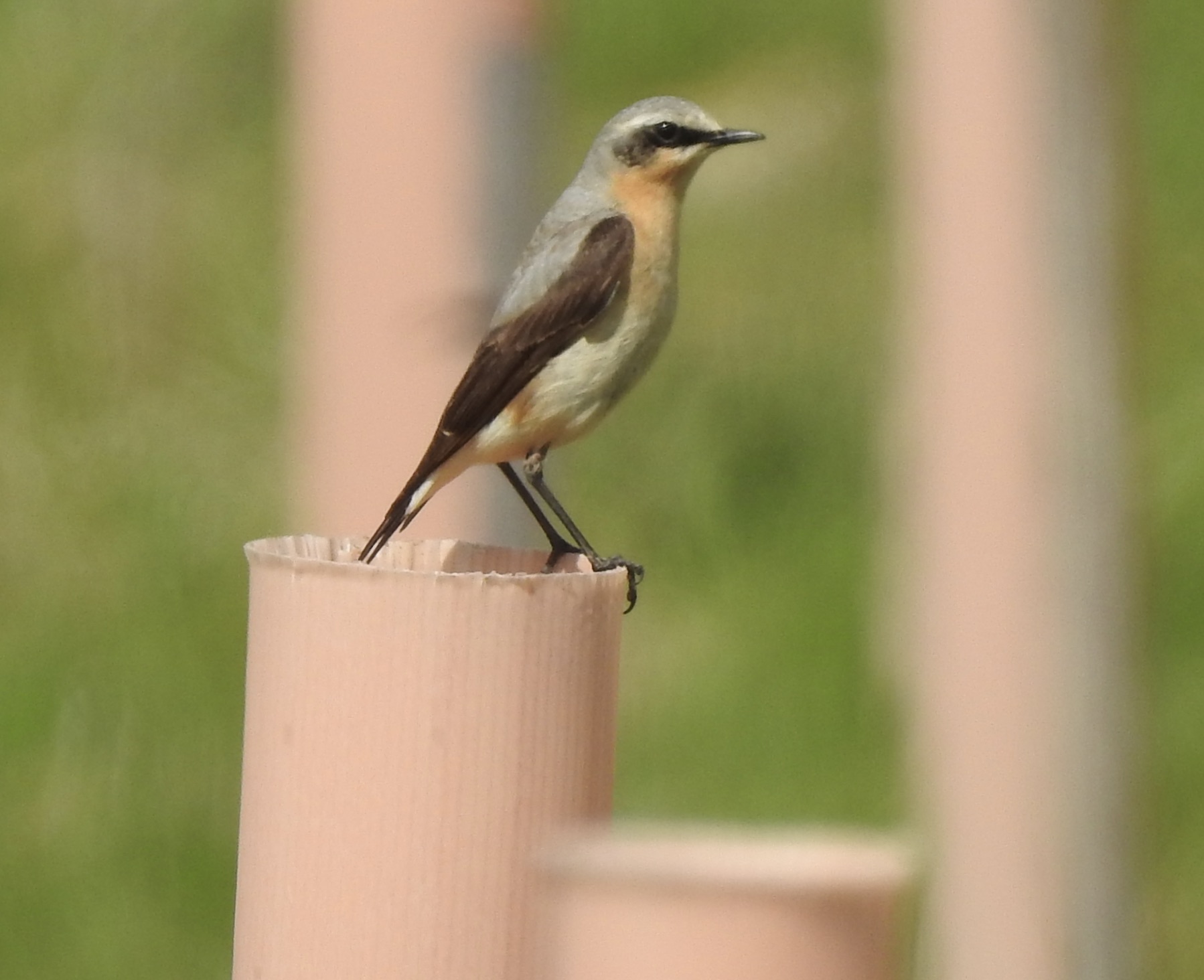
The main talking point of the latter half of the walk was a Wheatear we found on the tree-collars near Stapenhill Wood. We established it was a male, and probably a first-summer male because most of the wing feathers were dark brown rather than black. It was probably of the leucorhoa race also known as the Greenland Wheatear.

In this image the flanks look pale which is not so good for Greenland

It looked a better Greenland candidate when facing you, but I didn't get a shot of it doing that. To be absolutely sure one way or another it is best to catch and measure it. Hopefully it will still be here in the early hours when Tony tries to ring it.

Morton Bagot has a much smaller recording area than Earlswood. Its not quite as good for a species count, but the two sites (and Mappleborough Green in spring) compliment each other and make for a decent extended local "patch".


Saturday, 4 May 2024

Saturday May 4 - West Midlands Alldayer (Earlswood Lakes)

 Like an MP who has crossed the floor, I abandoned Morton Bagot to its fate today and switched allegiances to the Earlswood team. To be fair, no-one who visits Morton Bagot had expressed much interest in taking part (but I apologise if anyone felt betrayed). I also had the issue that I have dropped out of X or any similar Social Media platform and the Alldayer is administered through X (although again I should say that Mike Wakeman had kindly offered to relay our/my scores if required).

Anyway, a change is as good as a rest, and I thoroughly enjoyed this morning's effort. For me it was not an "all-dayer", just a "most of the morninger." Although I did not get up before dawn, but I was standing on the causeway between Engine Pool and Windmill Pool with John Sirrett and Matt Griffiths at 06.15.

John was the score keeper, and as far as I can tell he was doing a much better job than I ever did at Morton Bagot. The early signs were not promising. I had missed a Little Egret and although we quickly added Common Sandpiper and Sand Martin, I failed to get onto a House Martin John had spotted as it was flying off. I didn't see another all day.

I decided to head for the bottom end of Windmill Pool, an area I now know is called The Scrublands. One additional benefit today is that I got to find out where some of the places referred to by Whatsapp group members actually are. Yesterday this area had hosted a Garden Warbler, but this morning I couldn't find it. Instead I counted about six Whitethroats and a couple of Reed Buntings before emerging onto Springbrook Lane at the far end. Here I located Jim Winsper who was having something of a communications nightmare. He had found Pheasant and Mistle Thrush on the Umberslade Road (two more species I failed to see all day) before hearing a Green Woodpecker and finding that he couldn't connect to the Whatsapp Group. I did the honours (and also failed to see a Green Woody today).

One of the Scrubland early morning Whitethroats

My one piece of good luck was spotting a Badger as it trundled towards me along Springbrook Lane.

By the time I got back to the causeway I was able to reel off an unimpressive list of birds which did at least raise the total by six. 

I then had to head home to help Lyn and have my breakfast.

Nearly two hours later I returned. In the interim to total had been raised to 61 and I had missed a Yellow Wagtail and a Swift. Fortunately I was able to pull back the Swift immediately on arrival, and then contributed to the identification of an Arctic Tern which had confusingly arrived with a Common Tern in very benign un-Arctic Ternlike conditions.

The Arctic Tern

I decided to head for Terry's Pool and was given a list of "birds needed" to bear in mind. On the way I added a Snipe and a singing Garden Warbler to my personal list, but completely failed to find anything to contribute to the list.

A grim record shot of the Garden Warbler

On the plus side I located a Nuthatch which was feeding young through the entrance to its nest box. On previous Morton Bagot alldayers this species has invariably gone off the radar.

Matt was starting to have a put me to shame. Pings on my phone told me he had heard a Cuckoo (a bird I still need for the year), then a Lesser Whitethroat and best of all a male Redstart at Field Cottage. I Googled Field Cottage and discovered I was quite close. On reaching the road I caught up with Mike Jeeves who had also got the call. We found Matt, and shortly afterwards had the briefest of views of the Redstart before it disappeared for good. An Earlswood tick for me.

By now it was midday and my time was nearly up. I caught up with Willow Warbler and the long-staying Wigeon before reaching my car. Although I'd really enjoyed the day, I didn't feel I'd made much of a contribution to the team score. However, that was about to change. 

Willow Warbler

Great Crested Grebes displaying

As I was about to get into my car below the dam I glanced up to see an immature gull flying over. It was a first-summer Common Gull. I'm slightly embarrassed to admit this was a year-tick (they're scarce around here), but at least it was the 67th tick for the team's list.

As far as I know the score is still stuck on that figure, but I will update if I find out any more. My personal tally was 54.

PS: Late news just in: Matt managed to find a female Wheatear at Pound Close Farm at around 21:00, so that becomes tick number 68.