Sunday, 23 June 2024

Sunday June 23 - Mostly Morton Bagot

 I was hoping for a full morning's birding now that most of the decorating is completed, but unfortunately I was only able to spare a couple of hours. This meant parking at the church, where I met up with Dave, and making a quick dash to the flash.

The good news is that there is now lots of exposed mud.
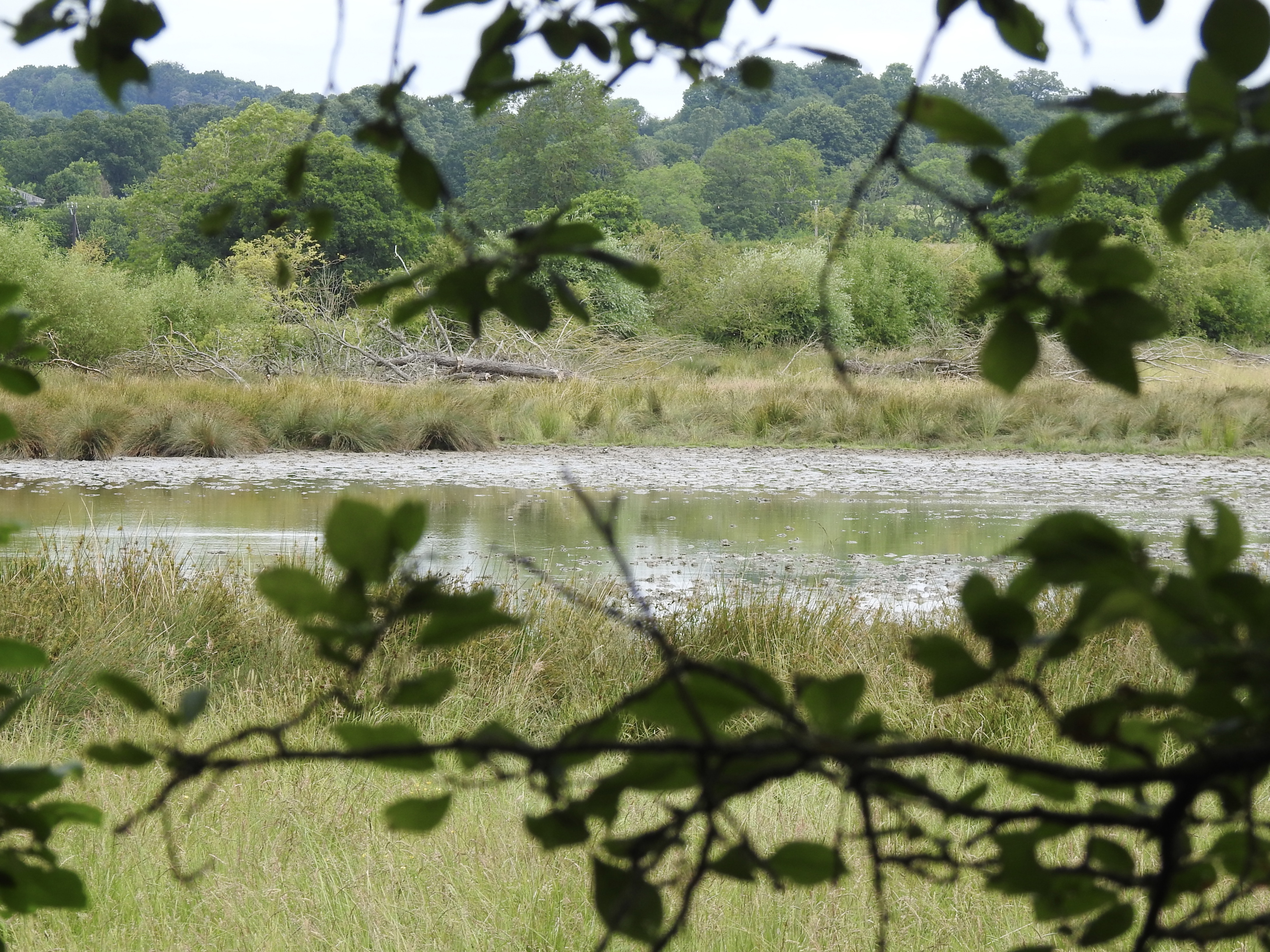
Optimum condition for wader passage (Just a shame its still June)

Even better, was the discovery of four well-grown juvenile Lapwings being protected from Carrion Crow attack by eight vociferous adults. I assume these have been present in the grass surrounding the flash for the last few weeks, only emerging once the water level had dropped. We felt that two were slightly older than the other two, so possibly two broods.

Two juvenile Lapwings, and if you search the shot carefully a Green Sandpiper

Also present, but remarkably hard to spot, was at least four Green Sandpipers. These will be adults from the Scandinavia pausing to moult before continuing their journey to Africa. We later flushed two off the Kingfisher Pool and another two of the HOEF scrapes. Also new arrivals since my last visit were five adult Teal, while a single Little Egret remains in residence.

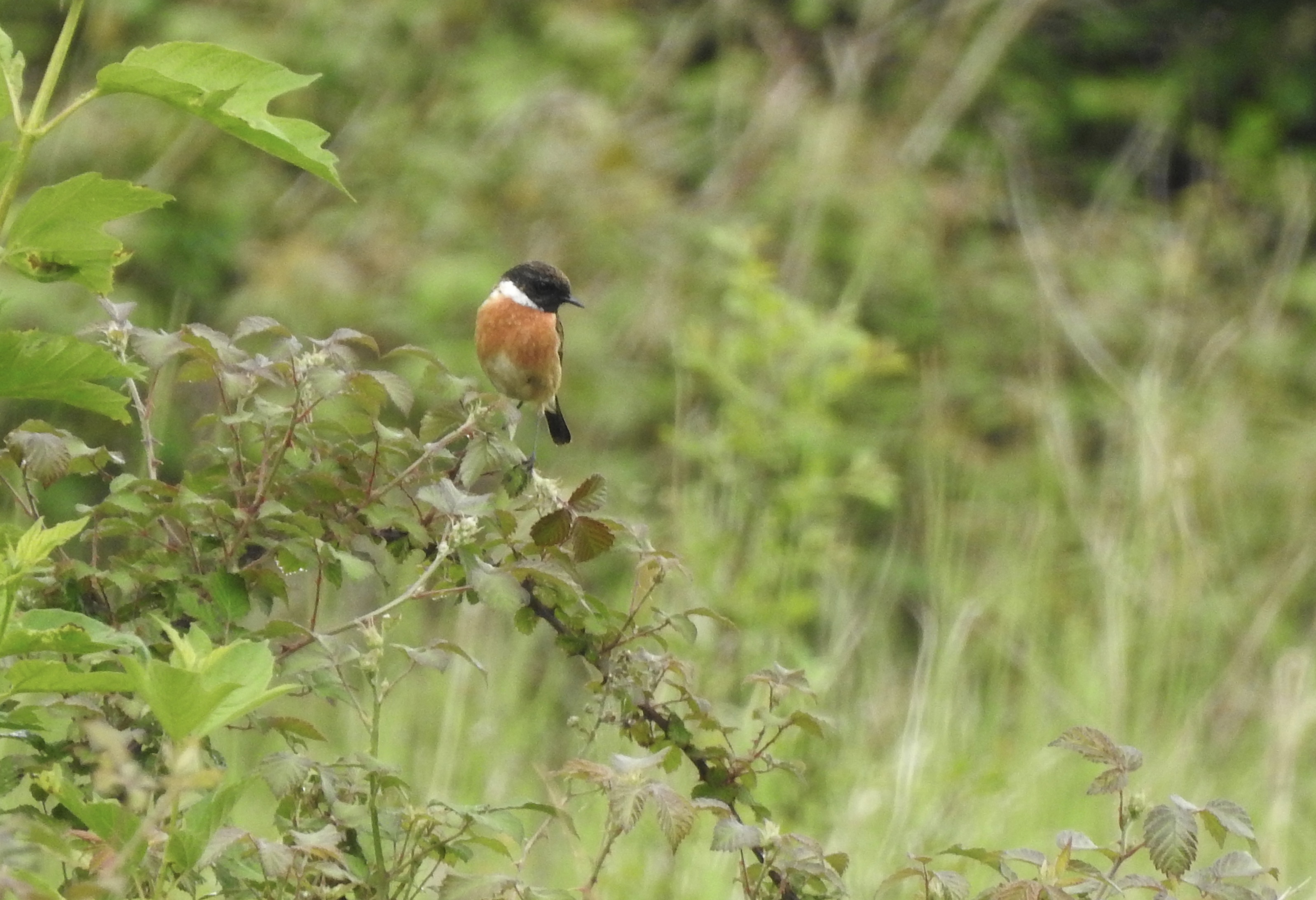
As we were pushed for time, the only other noteworthy bird was a singing Grasshopper Warbler, but I've heard that John Chidwick saw two juvenile Stonechats yesterday.

New insects included a few Marbled Whites and a Ruddy Darter. Maybe next time I'll have the time to try photographing them.

On Friday night I put my moth trap out for only the second time this month. This brought me 39 moths of 19 species, 11 of which were new for the year. The most unusual was a White Ermine (first since 2020), and the most spectacular an Elephant Hawk-moth.

White Ermine

Elephant Hawk-moth


Sunday, 16 June 2024

Sunday June 16 - It's a time of year thing

 I don't think I've ever allowed this amount of time to elapse between posts, but finally I think I've seen enough to make it worth putting pen to paper, as it were.

The problem is the month, mostly. June is hard work for little reward if you're a birder. Pretty much everything is getting on with breeding, so unexpected sightings are, well, very unexpected. To compound the issue, this June has been unusually cool and wet, so insects are in short supply.

Also we're decorating. Nightmare!

Fortunately friends have been a little more active, and this week's prize goes to Tony. Earlier this week he caught the Redditch Ringing Group's first ever Cuckoo near the Purity Brewery at Middle Spernal. It was a fully-winged juvenile, maybe the offspring of one of the Cuckoos which made a brief appearance here in spring.

Juvenile Cuckoo - per Tony K

Meanwhile, at Morton Bagot the sum total of the last three visits has been a Barn Owl, and two or three pairs of Lesser Whitethroats confirmed to be breeding, while the juvenile Stonechat count has increased to three although they all seem to be from the same brood.

Juvenile Stonechat

These Stonechats seem to have moved from the ridge field to the hedge bordering scrapes, and have thus eluded the ringers so far. Gallingly we couldn't see them at all today.

One bird that I've not seen this year, only heard, was Grasshopper Warbler. Dennis and Marion visited on Thursday and let me know they had heard and seen one. I came down on a blustery Friday and dipped out. But yesterday Tony caught one, and today another. This late burst of song is quite typical for Grasshopper Warblers which have enjoyed a successful breeding season.

Today's Grasshopper Warbler

Dave and I heard it singing, but we were unable to see it.

The first returning wader was a Green Sandpiper which Dennis and Marion heard near the flash field on Thursday. There is a little mud there now, but the obscuring vegetation seems worse than ever. At least two or three Lapwings are now in residence.


A small number of newly emerged butterflies are now flying. This morning I saw my first Ringlets of the year.

As for moths, there seem to be more Yellow Shell in the grass around the patch than normal, but otherwise its a similar story to that of the butterflies.

Yellow Shell

I've only put my garden trap out once this month, catching 21 moths of 13 species. Several were new for the year, the best being my first Common Swift since 2019, and my third ever Varied Coronet.

Common Swift

Varied Coronet

Incidentally the other type of Common Swift, i.e. the bird of that name, has been increasing a little in numbers at Morton Bagot, but so far the best count is still in the low teens.

Hopefully the latter half of June will be good enough to encourage a resumption of normal service.

Tuesday, 4 June 2024

Tuesday June 4 - Spernall STW area

 I decided to have a walk along the Arrow near Spernal STW today. It was cloudier than would have been ideal, and the birds seen were fewer than I would have liked. I saw no ducks (other than Mallard) and no Cetti's Warblers. Gaining access to within the treatment works may have helped. Fortunately Tony and the ringing team are allowed to ring there, and on Sunday they caught two Cetti's Warblers, one of which was a new bird.

Cetti's Warbler - Tony Kelly

They also caught 14 Reed Warblers, two Sedge Warblers, a Lesser Whitethroat and a number of other common species.

This morning I heard a Sedge Warbler singing from within the compound, and a scruffy Lesser Whitethroat which popped up onto a bare branch while I was changing my footwear in the boot of my car. 

Lesser Whitethroat showing badly

Pied Wagtail showing well

The only other birds of note were a Little Egret, and a Kingfisher.

Despite the cloudy weather it was worth peering into the hedgerows to look at insects. I was pleased to see a substantial lek of displaying Yellow-banded Longhorn Moths which danced up and down constantly before one finally landed and allowed me the chance to confirm what it was.

Yellow-banded Longhorn Nemophora degeerella

This is one of the commonest species of longhorn moths around here, but it was nice to add it to the year list.

Also new were quite a number of White-legged Damselflies, a classic river bank species.

White-legged Damselfly

It started to drizzle and I found myself looking at Snails. It was probably time to go home.

Mind you, two new Snails have gone onto to my Snail list (I haven't really got a Snail lifelist....yet).

Amber Snail Succinea putris

Copse Snail Arianta arbustorum


Sunday, 2 June 2024

Sunday June 2 - Morton Bagot

 The weather is now warm and sunny with gentle breezes from the west or occasionally the north, or as a birder might put it, bloody hopeless. Chuck June into the mix and its tempting to sit at home and do nothing.

But then you have to remember previous Junes when Red-backed Shrikes, Melodious Warblers and their ilk have turned up. You just never know.

So I went to Morton Bagot determined to ignore insects and look only at birds. You can probably guess how that went. But it was a solid birdy start. A male Stonechat was visible on the top of a willow before I'd even left the car, and I was determined to try and get some shots of the Reed Warblers now inhabiting the reeds at the dragonfly pools.

Reed Warbler wearing its bling with pride.

One of them had been ringed, and it seems likely that this would be a bird Tony and Leigh ringed last year.

The second bird appeared unringed

Pleased with my start I paused to watch a brood of recently fledged Chiffchaffs before continuing towards the scrapes. Here, the water level in some scrapes remains high, allowing no mud for any potential waders, while others had virtually dried up. A Little Egret took flight as I appeared. 

A Lesser Black-backed Gull squawked, always a good sign, and I looked up to see it was mobbing a Sparrowhawk. Scanning across towards Bannams I noticed that a Red Kite was getting similar treatment from a Carrion Crow, and at least four Buzzards were also circling. Perhaps it would be a good raptor day?

A short while later my optimism proved well founded as I spotted a Hobby flying towards me. For once I had the opportunity to get a photo as it powered past at speed.

The Hobby

It was now officially a good day. Right on cue a Kestrel turned up, adding one more bird of prey to the mix.

Unfortunately the flash field failed to rise to the occasion as usual, but I did hear a couple of Lesser Whitethroats giving their rattling song, having been largely silent for a few weeks.

Insects soon captured my attention, and I just couldn't help snapping my first Large Skipper of the year, followed by a newly emerged Black-tailed Skimmer looking nothing like the classic blue males of mid summer.

Large Skipper

Black-tailed Skimmer

I met Sam MacVie surveying butterflies for HOEF, and so tagged along with him for a while. The numbers seem surprisingly low at the moment, but until today it had usually been overcast and a little cool. That may account for it.

We still saw a few day-flying moths, including Burnet Companion, Mother Shipton and my first Straw Dot of the year.

Burnet Companion

Straw Dot

After we went our separate ways I spotted the two juvenile Stonechats again in the ridge field before returning home.

Friday, 31 May 2024

Friday May 31 - Morton Bagot

 I've been to Morton Bagot twice this week. The first time was on Wednesday with Linda and Mike. It was rather a shortened walk across a very damp site. We had good views of a pair of Stonechats and two Little Egrets before watching the local House Martins collecting mud.

We did slightly better for butterflies, seeing my first Common Blues and Meadow Brown of the year, and also the moths Burnet Companion, and Agapeta hamana. 

Female Common Blue

It's probably fair to say that insects were not Mike and Linda's bag, so it's probably just as well I was on my own this morning.

Obviously I was hoping to see a few birds, and I certainly found a fellow birder. Tony was on site hoping to ring the Stonechats, and I gather he had some good views of the inquisitive male before giving up and going home to make adjustments to his catching mechanism.

Meanwhile I ploughed my own furrow, heading off to see what else I could find. There was not much that was new, although I did count four singing Reed Warblers (three in the reedbed at the Dragonfly Pool, and one in the bulrushes of the scrape field), and at least five Reed Buntings including a pair which were clearly feeding young.

Female Reed Bunting with a beak full of flies

My main focus gradually shifted to insects. New moths for the year were four Yellow Shells,  a Pea Moth Cydia nigricana, and my first Spectacle for Morton Bagot. This is a moth I catch every year in the garden, but I'd never seen one actively feeding on flowers in the daylight before.

Spectacle fluttering on a flower (Dog-rose?)

As I ambled back, my progress got slower and slower as I became captivated by the sheer abundance of insects in the hedgerows and particularly on umbellifers such as Hogweed.

At least seven or eight species on this plant

The image above contains at least: Batman Hoverfly, several Longhorn Beetles of the genus Grammoptera, I think they were G ruficornis, three Greenbottles Lucilia ag, a Flesh Fly Sarcophaga ag, a Flavous Nomad Bee Nomada flava, a Yellow Dung Fly, and an Ichneumon Wasp (unidentifiable).

And the thing was, every umbellifer I looked at was similarly jam-packed with insects. Since I've got home I've spent several hours going through my photos to see what I could identify. Successes include:

Chloromyia formosa (A Fly)

Chrysophilus cristatus (A Snipe Fly)

Volucella bombylans (a bee mimic hoverfly) - The big one on the right

Volucella pelucens (another Bee mimic hoverfly) - on the right

There were also some extraordinary insects which turned out to be unidentifiable from photographs. The most impressive of these was an Ichneumon Wasp which might well have been Buathra laborator, but apparently other species are so similar that a microscope and a specimen are required.

Ichneumon Wasp (possibly Buathra laborator)

I could go on, but I think it's time to call a halt.

The main point is that staring into the vegetation in the summer can be absolutely fascinating even if it is impossible to identify many of the species encountered. It can save any birdless day.

Sunday, 26 May 2024

Sunday May 26 - Morton Bagot (the Stonechats fledge)

 This morning Morton Bagot was very damp following overnight rain but my late arrival coincided with an improving situation. 

The Reed Warbler at Netherstead dragonfly ponds was actually showing for the first time this year, and it foretold a reasonably successful visit.

I decided to vary my normal route by tackling the ridge field first. This was largely because the grass was mown along the footpath so there was less chance of wet legs. A Lesser Whitethroat was singing from the hedge adjoining the dragonfly pool field, but remained impossible to see. I had more success with a male Stonechat near the top of the ridge, while a singing Willow Warbler showed some mixed singer tendencies. That's now three local Willow Warblers at three sites doing at least some mixed singing.

A brief sighting of a Falcon sp had me doubling back to the ridge field in a failed attempt to establish what is was. However the search led to the discovery of at least two recently fledged Stonechats apparently attended by two males, neither of which had been ringed.

Juvenile 1

Juvenile 2

Male 1

Male 2

The important thing is that this is the second time Stonechats have been confirmed to have bred here. The story in the rest of Warwickshire is evolving slowly, but it may be that still barely more than two sites within the current boundary have confirmed breeding success.

There may well be three males on the site because there was a colour-ringed individual in a different section earlier in the month. I didn't see any females today, so its conceivable that another breeding attempt is underway. Stonechats can have multiple broods in a season.

Once I'd torn myself away from the Stonechats, the rest of the site produced only the usual birds. Four Mute Swans remain in the flash field, and a pair of Canada Geese now have goslings there. Two singing Sedge Warblers and at least two pairs of Reed Buntings (one of the latter carrying food) also suggested a successful breeding season.

However, it's not all good news. Tony has been checking nest-boxes and had found two out of three broods of  Blue Tits were dead, presumably a result of the wet spring season.

The dampness on the path at Netherstead suited the local House Martins and I watched up to five collecting mud for their nests.

House Martins collecting mud

Other hirundines seem to be a little down in numbers, with maybe just two pairs of Swallows flying around today. I did at least see two more Swifts, but have still yet to see any over the Winyates area of Redditch this year.

Saturday, 25 May 2024

Saturday May 25 - A quiet week

 Much as I'd like to go birding every day, that is not an option for me and this week was even more non-birdy than normal.

The only day I had free was Wednesday, remember that? The day it rained from dawn till dusk. I tried anyway, reasoning that the inclement weather might produce a passage wader or tern. It did deliver Sanderlings and similar delights to various waters in the Midlands, the ones with a shoreline, but I could find nothing more exciting than a pair of Gadwall. They were at Mappleborough Green.

This morning I had a little window of opportunity and decided to try Bannam's Wood. I had a plan, and it has to be said it worked out perfectly. My target was Spotted Flycatcher, the last regular summer visitor I had yet to see this year. There was one here last year, and I'm pleased to report it was back in almost exactly the same spot.

Spotted Flycatcher

This species was so much commoner as little as ten years ago, but now they take some searching for. It doesn't help that their song is right up there with House Sparrow in terms of melody. "Tzick"         "Tzick"        "Tzick"  that's about all they do. So finding it was quite a coup.

I was joined by Tony, and after an anxious 15 minutes we relocated it. Bannam's Wood is a very nice wood to walk through (although further into it the footpath gets very muddy) and we proceeded to winkle out a singing Garden Warbler, a Red Kite high above the trees, and possibly a second Spot Fly although we couldn't confirm whether the "tzick" heard was that species or just a young Wren, which has an annoyingly similar call.

At least it wasn't raining, so insects could be looked for. A Brown Silver-line moth fluttered out of the undergrowth, but the only new one for the year was the micro moth Plum Tortrix.

Plum Tortrix

This is one of a number of small moths which hide in plain sight cunningly disguised as a bird dropping. They are quite common so it obviously works.

I must get out more.