Sunday, 15 May 2022

Sunday May 15 - a conflict of interest

 We're now half way through May, and after some overnight rain Dave and I arrived at Morton Bagot with some hope that a wader may have dropped in. As it turned out, although there is now a decent edge to the nearest flash, not a single wader had turned up. 

Our birding highlights were therefore the continued presence of the singing Garden Warbler at Netherstead (they have always been one day wonders in the past), while a Red Kite, a Rook, and possibly two Grey Wagtails were all birds which would have added to last week's list.

Red Kite

Also noteworthy were nine singing Reed Buntings  (extending the patch record for the number of territorial males), and five pairs of Linnets.

Linnet

So our eyes were soon cast downwards, but not in disappointment. The warmer weather ensured that plenty of insects were on the wing. We logged nine species of butterfly (all ones already recorded this year), two moths; Mother Shipton and Common Nettle-tap, and three species of damselflies including the first Beautiful Demoiselles and Azure Damselflies of the year.

Orange-tip


Male Beautiful Demoiselle

Azure Damselfly  (immature male)

This conflict of interest is typical of what happens from mid-May. The abundance of life at your feet is irresistible. I say abundance, recent wildlife literature emphasises a shifting baseline. Even I have lived long enough to remember far more butterflies and other insects in the countryside, and I can only hope that NGOs like the Heart of England Forest scheme stimulate the government to encourage a reversal of the dreadful trend towards the day when insects are scarce and even less biodiverse.

On a less gloomy note, I can't help aiming my camera at the more distinctive looking of other insect groups. In this case I picked up a longhorn beetle called Anaglyptus mysticus, and the UK's largest cranefly Tipula maxima, both of which may well be new for me.

Anaglyptus mysticus

Tipula maxima

I should admit that I didn't have a species name for them until I got home and carried out an internet search.

Mother Shipton


Common Nettle-tap

There is still plenty to see, you just need to get out there and look while it's still available.

Thursday, 12 May 2022

Thursday May 12 - to boldly go

 Although I appreciate that spring is not over, and indeed this could be my best time of the year for a decent wader, I have also been nursing a desire to go back into exploring mode, to seek out new habitats and undiscovered bird populations...etc etc.

So on Tuesday I picked out the top left hand extremity of my Circle, and went to it. The area in question includes Red Hill Farm, so I'm calling it Red Hill. I love visiting new places, but there is an obvious downside. They are unvisited because as far as anyone has ascertained, there's nothing there.

I can confirm that my visit contained no surprises, unless you count the discovery that the summit of Wast Hill (near Red Hill) is actually the highest point in my Circle. Cobley Hill has been dethroned. Mind you, it's a bit open to interpretation whether the actual summit is in the Circle.

In the absence of anything out of the ordinary, I did at least have a decent view to look at. Maybe it could be an autumn raptor watchpoint?

The view from (nearly) the top of Wast Hill

Feeling I needed to give myself a chance, I headed for Alvechurch Fishery. An extensive series of fishing pools with open access (there's even a cafe), it sits below the dam at Lower Bittell Reservoir. The largest pool contains a lightly vegetated island while the pool has a bit of a wader-friendly edge. Not that there were any on my visit, but a pair of Common Terns flew in and landed on the island before returning to the reservoir.

Common Tern back at the reservoir

Numerous Swifts were flying overhead, and 20 or 30 Sand Martins were occupying the airspace above the dam. Unfortunately I don't have a permit for the reservoir any more, so I couldn't check, but it looked to me as though they might be preparing to nest in the dam wall. (I checked the latest WMBC Report when I got home, and sure enough they were nesting in the brickwork in 2019).

Below the towpath, on the fishery side, is a bank of wild flowers. These attracted a good selection of spring butterflies including my first Red Admiral of the year.

This morning, undeterred by a modest bird list at Red Hill, I picked another area to the north of Redditch. This was Kings Norton Golf Course. It occupies the space between Weatheroak Hill and Wythall (and is nowhere near the Birmingham suburb of Kings Norton).

I had never been here before (unless you count a brief period in the 1990s when I used to jog along the roads surrounding it in a failed attempt to get fit) but I am aware that a decade earlier a ringing group was monitoring a local population of Tree Sparrows, and that even Pied Flycatcher had bred there. 

I am sure those days are long gone and I didn't find any sign of either species, but the habitat may still be available.


I stuck to the well marked footpath and emerged with nothing better than a Mistle Thrush, a Nuthatch, and a few Whitethroats on my paltry low thirties bird list.

More exploring is likely.

Monday, 9 May 2022

Sunday May 8 - trying to relax

So what do you do the day after you've spent 11 hours in the field? Well obviously you sit in the garden and relax, or at least you try to. 

My relaxation lasted about five minutes. Scanning the skies brought me a pair (I assume) of Red Kites circling together high over the garden. By the time I'd grabbed the camera they had separated, so here's just one of them.


Red Kite

Lyn joined me, and pretty soon the present state of the garden was mentioned. Personally I like weeds, but Lyn's not so keen. I was encouraged to pull them up, so several armful's of Herb Robert and Precumbent Yellow Sorrell later I was deemed to have done enough...for today, and I could go back to sky-gazing. This brought me #LocalBigYear tick number 121, a Common Swift.

There have been very few butterflies in the garden this year (and fewer bees) despite the garden looking unchanged. Today a Small White was the only one I saw. Nevertheless I was resolved to put the moth trap out.

The overnight temperature dropped to seven degrees. Last year at the same date it was the same temperature and I caught just three moths, so the omens weren't great. 

But, for some reason this year there were moths aplenty. I caught 16 of 10 species. There were no firsts for the garden, but seven of them were new for the year. This is probably because I'm only trapping once every two or three weeks this year.

The highlight, and most spectacular moth, was an Iron Prominent. Only my third ever, and one I didn't see, despite much more intensive mothing, last year.

Iron Prominent

The other ones which were new for the year, all pristine and fresh, were Common Pug, Orange Footman, Muslin Moth, Flame Shoulder, Shuttle-shaped Dart, and Heart and Dart.

Finally, I forgot to share a bit of ringing news. On May 2 2022 the guys controlled a Reed Warbler at Redditch STW which had been ringed at Titchfield Haven in Hampshire on 15 September 2018.

Reed Warbler

So this bird had been ringed as a first year and had then travelled to Africa and back four times before turning up in Redditch, quite possibly still to reach its final breeding destination. Quite a thought.

Saturday, 7 May 2022

Saturday May 7 - WestMidsAlldayer

 I was up nice and early, arriving at Morton Bagot at about 04.20 just as the first hint of light appeared in the eastern sky. The weather was set fair, and it looked like we would have the largest team ever assembled here for the alldayer.

First bird was a Moorhen which "pook"ed from the direction of the old pool. My main emphasis as always was to try to add some owls to the list, and indeed I heard a Tawny Owl hoot in the distance (bird 3), and the gentle "purr" of a Barn Owl (bird 7). I walked down from Bannams Wood and was soon ticking off many of the species I had listed as very likely. These included Grasshopper Warbler although there seemed to be only one singing, a pair of Shelducks (which evidently disappeared as they weren't seen again all day) and a drake Teal, which I was half expecting to be absent.

Two birds which were missing were Avocet and Little Ringed Plover, both of which have been present recently.

The first team member to arrive was Tony K. He had set up some mist nets in the reed bed at the dragonfly pool and I followed him round as he unravelled them. The only Reed Warbler on site was singing there, and we also saw the only Coot currently breeding. Several Pied Wagtails made a sharp exit, and had obviously been roosting, and Tony found he had caught a male Reed Bunting almost straight away. He planned to move the nets to Stapenhill Wood later in the morning.

No Cuckoo was calling, and that was to be another bird we missed out on.

I spent the last hour before I had to nip home below Bannams Wood, and added a calling Nuthatch and a singing Coal Tit to the list. These were both species that have been missed in earlier alldayers.

By the time I returned it was 8.00am and the team was assembling and finding stuff. Martin W had joined the ringers, and I spotted Gary J and Andy G in the distance. It was nice to meet Andy and to discover that he had found what was arguably the bird of the day, a male Redstart. Unfortunately for the rest of us it soon disappeared.

The ringers had caught two excellent birds, a Sparrowhawk and a Jay. I don't think anyone saw another Sparrowhawk, and only SamMcV later found a Jay.

 Sparrowhawk (Tony K)

Jay (Tony K)

After a quick tally up, we found we had reached 56 species, which didn't seem too bad. Gary, Martin and I headed for the flash field, adding a singing Goldcrest in the hedge, and a female Tufted Duck which flew towards us before returning the way it had come. I'm guessing it was headed to the small fishing pool just outside the recording area.

We joined Andy again, and Gary spotted a couple of distant House Martins, while Andy tried to get us on a very distant large gull. I ended up heading towards Netherstead with Gary, before we went our separate ways.

My route took me down the access road and I walked into a singing Garden Warbler, my best find of the day. I spent a long time listening to it, and tried videoing it to get the song recorded. I finally saw it quite well, but it was back in the thick stuff before I could get a shot.


During the afternoon I made contact with Sam McV, who was trying to tease something new out of Bannams Wood. I went back the the flash field and was relieved to find a Black-headed Gull which has been missed in previous years, but had been regular here throughout April.

By now it was getting warm, and it was great to see loads of insects including my first Large Red Damselflies, and Small Heath of the year.

Large Red Damselfly

Small Heath


I forced myself to get back on message, and ended up at the raptor watchpoint from where I unexpectedly spotted a Hobby. Normally the phrase raptor watchpoint is stated with a degree of irony. 

Record shot (barely) of the Hobby

Buoyed by this success and decided to fight my way through the vegetation into Stapenhill Wood. This brought me the 63rd, and last, tick of the day, a Treecreeper.

By late afternoon I found myself staking out the flash field in the hope of either a Rook or a Starling, both absent from the list and possible in that area.

Gary returned for a last walk round, but I was too tired to keep going. Nothing further was added, so we had to settle for a slightly under par score of 63.

Tuesday, 3 May 2022

Tuesday May 3 - woodland birding

 Grey and cool again. I decided to go to one of the HOEF woods hoping for my first Cuckoo of the year. The ringers had heard one there at the weekend, but I was not as fortunate. 

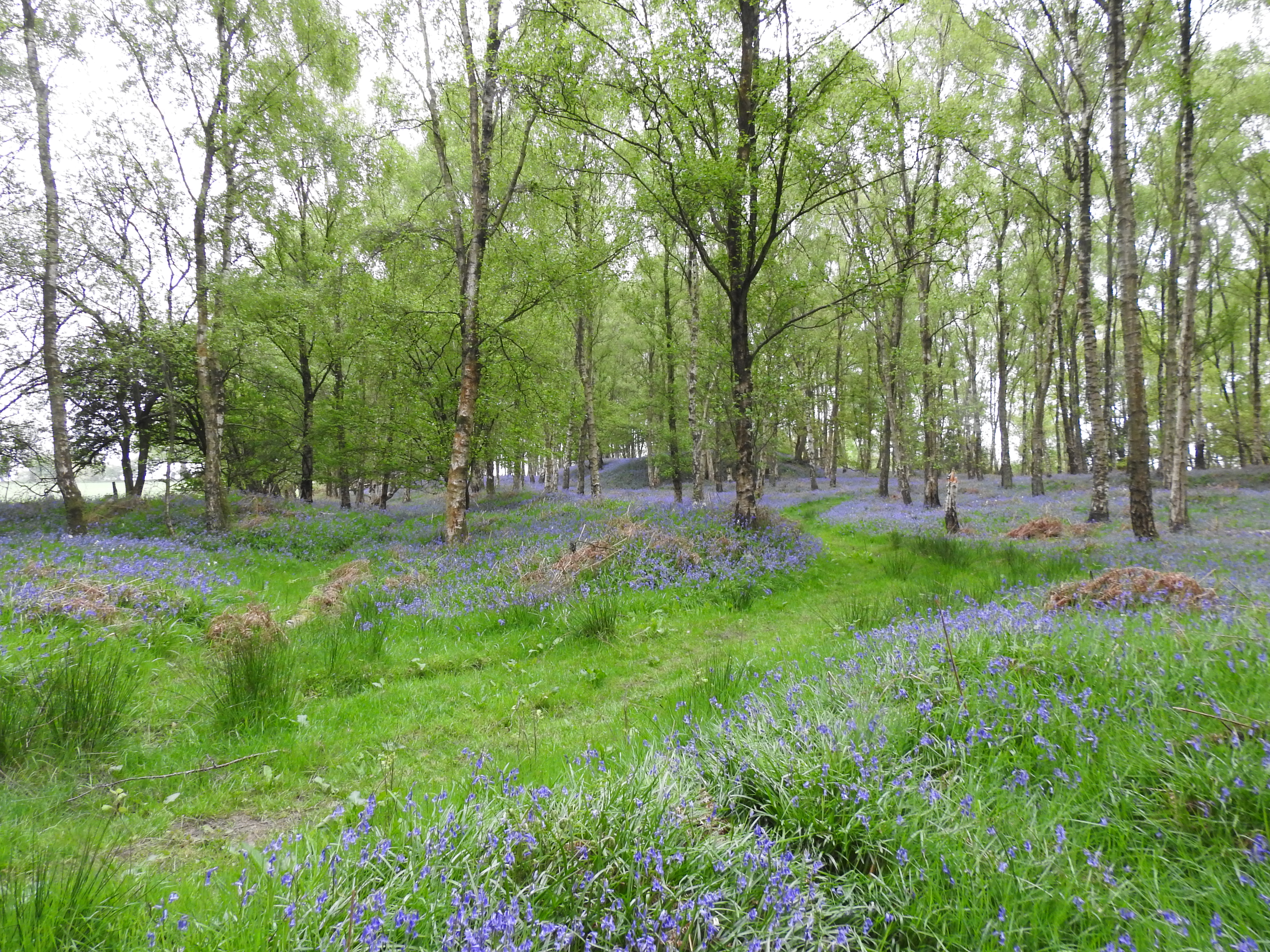
On the other hand I did see and hear my first singing Garden Warbler of the year, #LocalBigYear tick number 119. It flew back into cover as soon as my camera appeared, so no photo. The bluebells were spectacular so I used it for that instead.


Other birds recorded there included a singing Willow Warbler, double-figure counts of both Chiffchaff, and Blackcap, and a territorial pair of Ravens.

After that I had some errands to run, and decided to have a quick look at Haselor scrape. There was plenty of mud, and a pair of Little Ringed Plovers had it all to themselves. Determined to photograph something I aimed my camera at a Whitethroat singing from the top of an oak tree.

Whitethroat

Meanwhile the ringers have caught a celebrity at a site near Studley. The key point about the Sedge Warbler referred to is that it was bearing a French ring. 

Monsieur le Sedge Warbler

It was part of a catch of 42 birds including 15 Sedge Warblers and four Reed Warblers. I believe that they will be joining us for the Alldayer on Saturday.

Monday, 2 May 2022

Monday May 2 - Dunlin twitch

A message from Gary J had me abandoning my promise to stay home and dig the garden. Yes I twitched a Dunlin. The fact is that Mappleborough Green Flash is the most local of local patches and can be visited in less than an hour. The boat remained unrocked.

Dunlin

This is a proper wader, potentially an arctic migrant (it looks quite long-billed). Admittedly I normally get one at Morton Bagot, but not quite every year.

Speaking of Morton Bagot and this blog. Over the years I have done it, issues have cropped up more regularly than I would like. The web provider suddenly changes things without warning, and as someone with a tenuous grasp of technology it always throws me.

The latest issue is a change to the way I reply to comments left, and so far I haven't been able to find a way to do it. 

So this is a message to Andy G who left a nice comment on my last post asking about the upcoming alldayer. 

The answer is that the Alldayer is this Saturday, and yes you'll be very welcome.  The more the merrier.


Sunday, 1 May 2022

Sunday May 1 - Migrants still on the move

 I should begin by thanking Andy G for letting me know that he visited yesterday and added a singing Cuckoo and a hawking Hobby to the Morton Bagot year list which I still claim not to be compiling this year. That brought the total to 97 before I even set foot this morning.

Dave decided to ignore this mornings' drizzle and join me to see what we could find. Two species we failed to see were the aforementioned Cuckoo and Hobby. The cold damp conditions being less than ideal for them. 

On the other hand I had heard a singing Reed Warbler before Dave turned up, so that was another one for the patch list. We soon noticed that there were more singing Lesser Whitethroats (six), Whitethroats (11), and Sedge Warblers (five) than there had been. Two singing Grasshopper Warblers were not new for the year, but were the first we'd actually seen (rather than just heard).

Grasshopper Warbler forgetting to skulk

It was all very encouraging, and got better as we skirted the Red-backed Shrike field as it contained three Wheatears and a #LocalBigYear tick in the form of a smart male Whinchat. The latter soon disappeared over the brow of the hill so the views were a bit distant. A Red Kite chose this moment to fly past, mobbed by a Raven.

Whinchat

Female Wheatear

At the flash field we were immediately struck by the good numbers of hirundines; 30 Swallows, and at least two each of Sand Martin, and House Martin, and from the looming Alldayer point of view the return of an Avocet was very welcome. We flushed a late Fieldfare into the top of an Oak, where it joined a pair of Starlings. (We'll be lucky if they are still around next weekend).

Even better was a Yellow Wagtail Dave spotted in flight. He was wondering at the anxiety in my voice as I initially failed to locate it. This was the first here for at least couple of years, and obviously another #LocalBigYear tick. Fortunately it made a repeat performance allowing me to see it, and then seemed to land somewhere behind the sedge. We moved to the second viewpoint and discovered it was a lovely male, though barely in range for a few record shots.

Yellow Wagtail

More good news for next weekend's alldayer was the continued presence of a drake Teal, a Little Ringed Plover, and the pair of Shelducks.

All in all this was another very lively visit, and reinforces my belief that this is the best time of the year to visit Morton Bagot.

One postscript is that I was told that a drake Scaup which had been found at Upper Bittell this morning, had flown to Lower Bittell. I decided to head over there promptly, but was disappointed to find it had gone....back to Upper Bittell (thus leaving the Circle and causing me to lose interest in seeing it).