Thursday, 2 June 2016

Thursday June 2

A cool grey morning, somewhat untypical of June. Birding expectations plummet at this time of year, but my Pager reminded me you can never write off your chances, a Broad-billed Sandpiper having been found, and then lost, at Brandon Marsh near Coventry this morning.

However, the birding was pretty steady and I was left to tick off the first juveniles of the season of species like Long-tailed Tit and Pied Wagtail.

Juvenile Long-tailed Tit
Adult female and juvenile Pied Wagtail
Sadly there was no trace of the Lapwing chicks, but the two Shelducks were still present, as were three pairs of Tufted Ducks.

The cool conditions meant very few butterflies and dragonflies, but I still managed to photograph some striking insects.

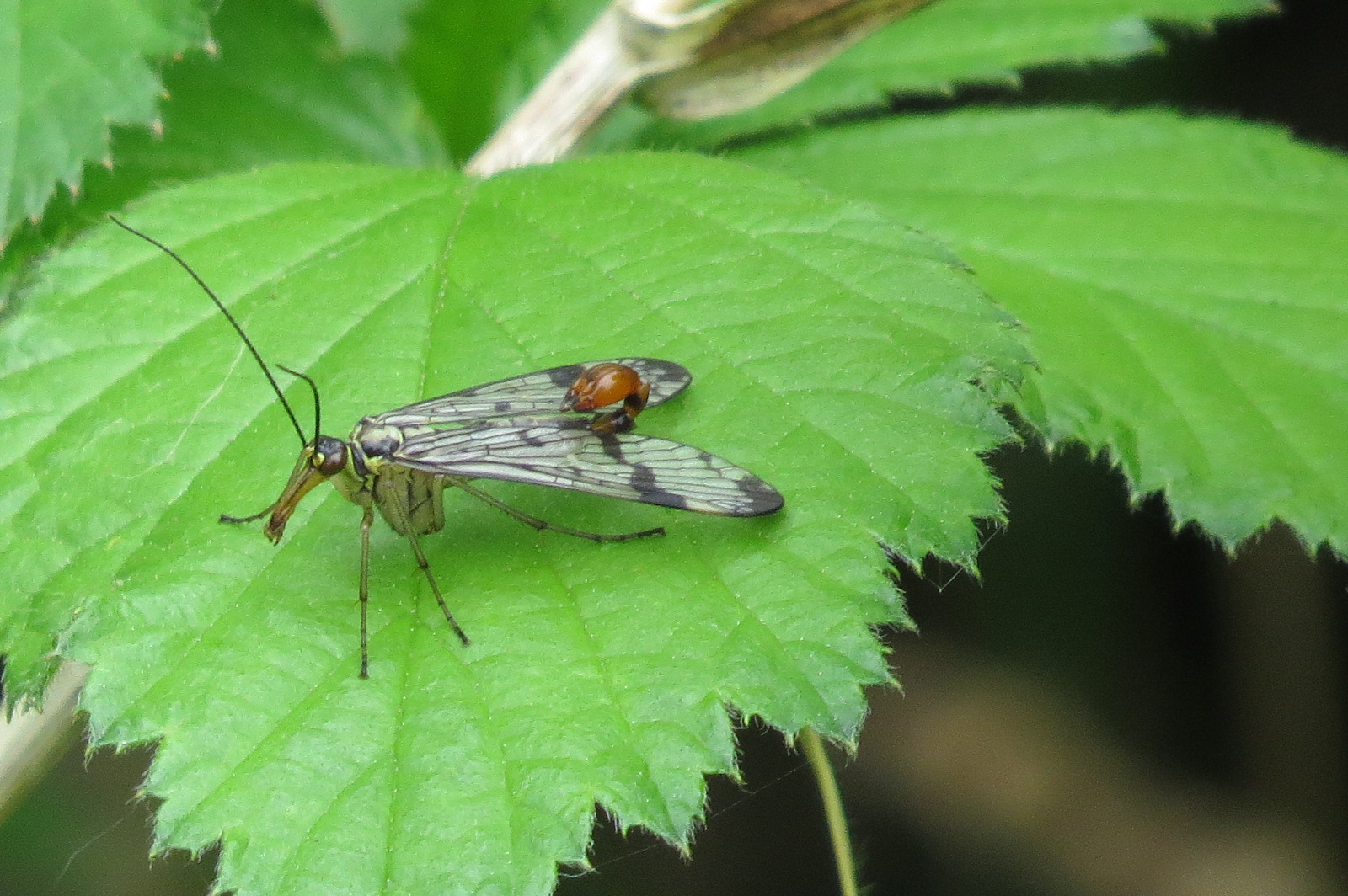
A male Scorpion Fly sp
Diamond-backed Moth
Ichneumon Wasp - probably Pimpla rufipes
Fly sp - possibly Yellow Dung Fly
I am no expert at identifying insects, but as it often takes microscopic identification of genitalia to get to the right species I have no intention of going that far.

Sunday, 29 May 2016

Sunday May 29

Sunny with a light north-easterly breeze.

On arrival I headed for the reed-bed at Netherstead to confirm that the Reed Warbler was still singing and to try to see it.

Hide and seek with the Reed Warbler
Feeling pleased with this success I went to the south end and started walking north-east. The Willow Warbler was still singing but there was little else of note until I headed down the footpath towards the pool.

Juvenile Tawny Owl
The fledgling Tawny Owl was in the Oak Tree where the adult is regularly seen. I couldn't see any more, but there could easily be a family of them hidden away in the canopy. A little further on and I was being buzzed by a pair of angry Lesser Whitethroats.

Lesser Whitethroat
Clearly their young have recently hatched. Down at the pool I had a brief surge of excitement as I spotted a wader in the shallows. End of May, its got to be something good. In a way it was, my first ever May Green Sandpiper. I didn't know whether to laugh or cry.

As far as this bird is concerned, autumn has arrived!
I am used to seeing the first returning Green Sandpipers in late June, but May! This bird must have arrived in Scandinavia in mid April, done the business and immediately high-tailed it back to the UK. The adults start moulting as soon as they get here before heading further south from September.


The Canada Geese seem to have added to their brood since I saw them with three goslings a week ago.

At the Flash field I could only see adult Lapwings, but their alarm calls lead me to suspect that at least one chick was hidden in the grass. The Shelduck pair were also still present.

The return journey was largely devoted to finding and photographing insects.

Not a bumblebee. 
Azure Damselfly
The bumblebee-like insect is a hoverfly called Volucella bombylans which mimics a bumblebee's markings. They apparently come in two forms, one which mimics Red-tailed Bumblebee, and the other, seen today, which mimics White-tailed Bumblebee. Dragonflies seen were Broad-bodied Chaser, Large Red Damselfly, and my first Azure Damselfly and Blue-tailed Damselfly of the season.

Finally, shortly after taking a picture of this pair of Swallows;


the peace was shattered by the sudden appearance of a Hobby intent on catching and eating them. I'm pleased to say he missed, but rather less pleased with my efforts to capture the moment.

A fuzzy Hobby
It was all going so well.

Friday, 27 May 2016

Friday May 28

Largely windless conditions with a mixture of sunshine and high cloud.

I concentrated on surveying in the first instance, but the bird population is now pretty settled and the only notable events to report are the presence of two Lapwing chicks in the Flash field, the continuing presence of a pair of Shelduck there, and the fact that the Reed Warbler is still singing at Netherstead.

Once the weather had warmed up I spent most of my time looking for insects. These included my first Broad-bodied Chaser of the year, which looked newly emerged.

Broad-bodied Chaser
A magnificent looking beastie. Further along the hedge I spotted a very pale damselfly which I suspected was a White-legged Damselfly. I am not sure whether I had recorded one here before, so I emailed a photo of it to the Warwickshire Dragonfly recorder, Peter Reeve, who has kindly confirmed it was an immature female of that species.

White-legged Damselfly
Other curious mini-beasts came within range and were tentatively identified.

Rhagio scolopaceus (a species of Snipe Fly)
Same Snipe Fly sp


A pair of potter wasps, probably Symmorphus gracilis
Finding and photographing insects is a very enjoyable diversion when the birding is a bit flat.

Wednesday, 25 May 2016

Wednesday May 25

After a cold cloudy day I set off after work in similar conditions but within a few minutes of parking I found that the grim conditions had not dissuaded a new migrant from arriving and singing at me from the reedbed at Netherstead. I refer to a Reed Warbler whose arrival was something of a relief.

Typically it remained out of sight despite sounding as though it was barely 10 metres away. Earlier I had spoken to Sue Matthewman who was keen to take part in the House Martin survey for the BTO and told me she and her husband had been kept awake by a Cuckoo singing at 03.30 this morning!

I headed for the Flash, noticing a wading Grey Heron at the pool on the way.

Grey Heron
The light was too poor for a decent photograph and although it seemed to catch several things, I was unable to establish what it was eating.

A couple of Shelducks flew over. The nearest flash had drained to a muddy puddle which supported two broods of Mallard ducklings and three Lapwings. There was no sign that any Lapwings are still sitting, so either they have failed to produce any young this year or more positively any chicks may have been hiding in the grass.

Sunday, 22 May 2016

Sunday May 22

A sunny morning with a very light south-westerly breeze was excellent for insects but pretty dire for birds.

The Cuckoo is still calling and as he was driving away Dave performed an emergency stop as it flew across the track in front of him. I was some way behind and saw him stop but missed the bird.

At least 49 Swifts were hawking insects with House Martins high over the fields between Morton Bagot and Studley, and the pair of Shelducks are now on the main pool.
Shelduck
So to insects. The butterflies comprised Large Whites, Small Whites, Green-veined Whites, Peacock, Small Heath and Orange Tips. Dragonflies were Large Red Damselfly, four Beautiful Demoiselles, and two Common Blue Damselflies.

Other insects were photographed but not necessarily identified to species level.

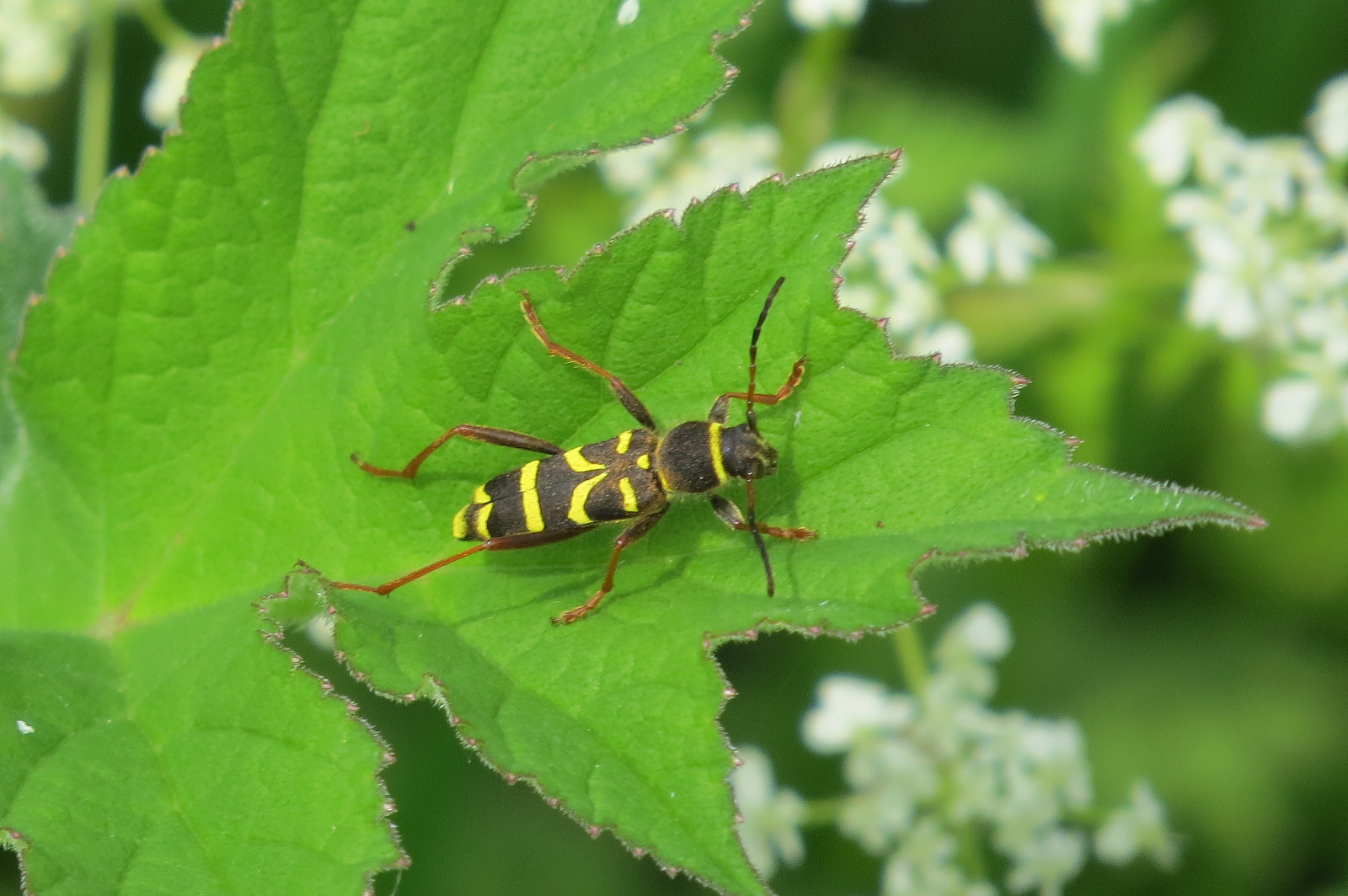
Wasp Beetle
A male Tipula fascipennis
A female Tipula fascipennis

Probably Common Dronefly - Eristalis tenax
Rhingia campestris (or possibly Rhingia rostrata)

I think this is an Ashy Mining Bee

Large Red Damselfly

Green-Veined White
I will be googling the unidentified flies, bees etc in the hope of coming up with some names for them in due course.


Thursday, 19 May 2016

Thursday May 19

I've just been studying the results of the 2016 Warwickshire Patch bird race. I was unable to compete, and it was left to Mike Inskip to carry the flag. Sadly he had a pretty poor day and finished on 54 species, leaving Team Morton Bagot 12th (out of 12 - i.e. last). In fact Dave and my 66 species the day before would only have moved us up to 11th. World beaters we ain't.

So to this morning. A light southerly breeze and mainly sunny conditions were good for surveying. I heard the Cuckoo, and saw a Mistle Thrush heading over. However, there was no evidence of any passage migrants, and the wader count consisted of three pairs of Lapwings. The two pairs of Shelducks are still present though, and there are now two broods of Canada Geese.

As the day warmed up I switched my attention to insects, and finally recorded my first odonata species (that's dragonflies) in the form of a Large Red Damselfly which disappeared almost as soon as I had seen it, and then a much more obliging Beautiful Demoiselle, arguably Morton Bagot's most important species in terms of their fragmented distribution in the rest of Warwickshire.

The male Beautiful Demoiselle
There were plenty of butterflies fluttering about, including Small Heaths, Brimstones, Orange Tips, and various Whites. The latter are impossible to identify until they land, and not easy even then. I took a photograph of a Small White....I think.


Back at Netherstead I failed to find any dragonflies, but did at least see a distant Hobby, and then spotted a Red Kite which flew from above Bannams Wood and along the ridge of Clowes Wood, never getting close enough to allow a satisfactory photograph (but several very unsatisfactory ones which I'll keep to myself).

Finally the token bird picture.


Thank goodness for Pied wagtails.

Sunday, 15 May 2016

Sunday May 15

A sunny start, but it became mostly cloudy by late morning. A very light northerly breeze kept the temperature on the cool side.

I stepped from my car on arrival and immediately noticed an adult Peregrine on the pylons.


A good start. The reed bed continues to contain only Sedge Warblers, the eventual total for the whole area being four singing males.

An adult male Linnet in full summer plumage
Dave arrived, and we set off on the usual circuit. It was difficult to shake off the feeling that spring migration is at an end, and with virtually no new arrivals to look at we inevitably started concentrating on insects.

The first Small Heath of the year
The pair of Canada Geese on the main pool now have three goslings, while we also noticed a Moorhen with a brood of three on the Clowes Farm pool. Two juvenile Blackbirds were recently fledged but at the Flash field there seems to be only one Lapwing sitting, and the presence of both adult Redshanks may mean that their breeding attempt has faltered. A single Little Ringed Plover was present again, as were the four Shelducks, both pairs engaging in courtship behaviour.

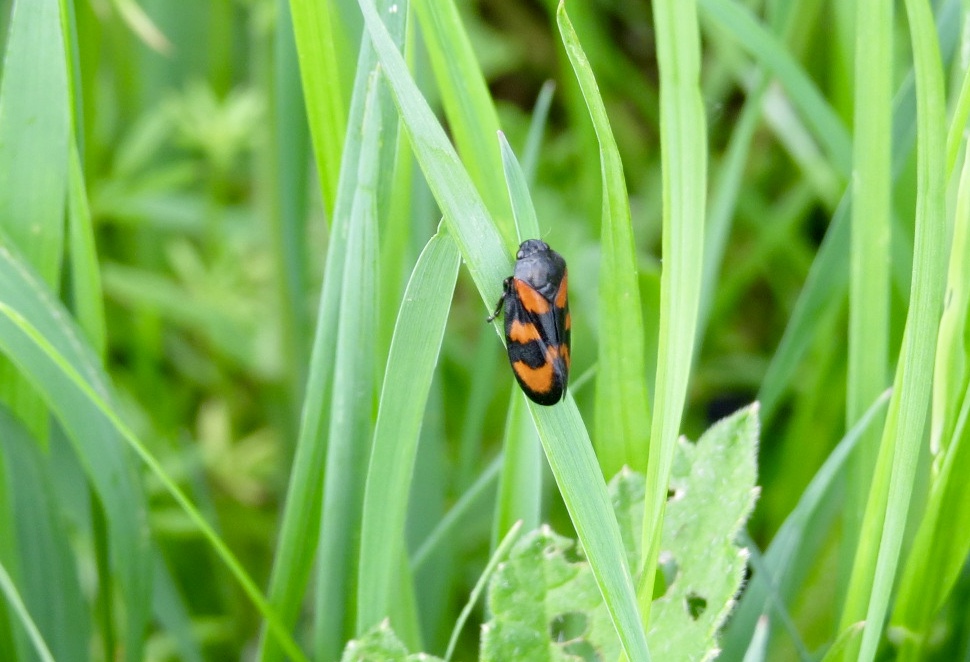
Back to insects, with a continuing dearth of damselflies I was left to photograph this distinctive species of Froghopper.

Cercopis vulnerata
Apparently it is unusual among Froghoppers in that the nymphs develop underground, but like their more familiar cousins they also surround themselves in cuckoo-spit.

The final piece of bird action consisted of a pair of Sand Martins which flew over before joining a spiralling flock of House Martins and Swifts hunting insects in a thermal.