Saturday, 31 October 2020

A few more moths

 It's the penultimate weekend of the Garden Moth Survey and for a change it was pretty mild.

Determined to outfox the next door Wasps I turned the light off and hauled the trap inside an hour before it started to get light. The plan worked well and as dawn approached I noticed a moth on the doorframe of the utility room. It was something new.

Checking it against the books I established it was a Beaded Chestnut. A bit more research revealed that the species is common, and is very similar to Lunar Underwing, which is also common.

Beaded Chestnut

This is only my third year of moth trapping, and so it's still exciting to peer into the trap to see what's there. I also still experience an unsettling feeling that maybe I am making some fundamental error causing me to overlook something. Learning that Beaded Chestnut is a common moth and knowing that I have recorded quite a few of the confusion species, makes me wonder if I have misidentified some Lunar Underwings in the last few years. Hopefully not.

I only caught eight moths of five species, the full list being: Light Brown Apple Moth 2, Red-green Carpet 3, Double-striped Pug 1, Vapourer 1, and Beaded Chestnut 1.

These were the first Red-green Carpets I had seen since April and they included a particularly green one which caused a flurry of research.

A normal coloured Red-green Carpet

A very green Red-green Carpet

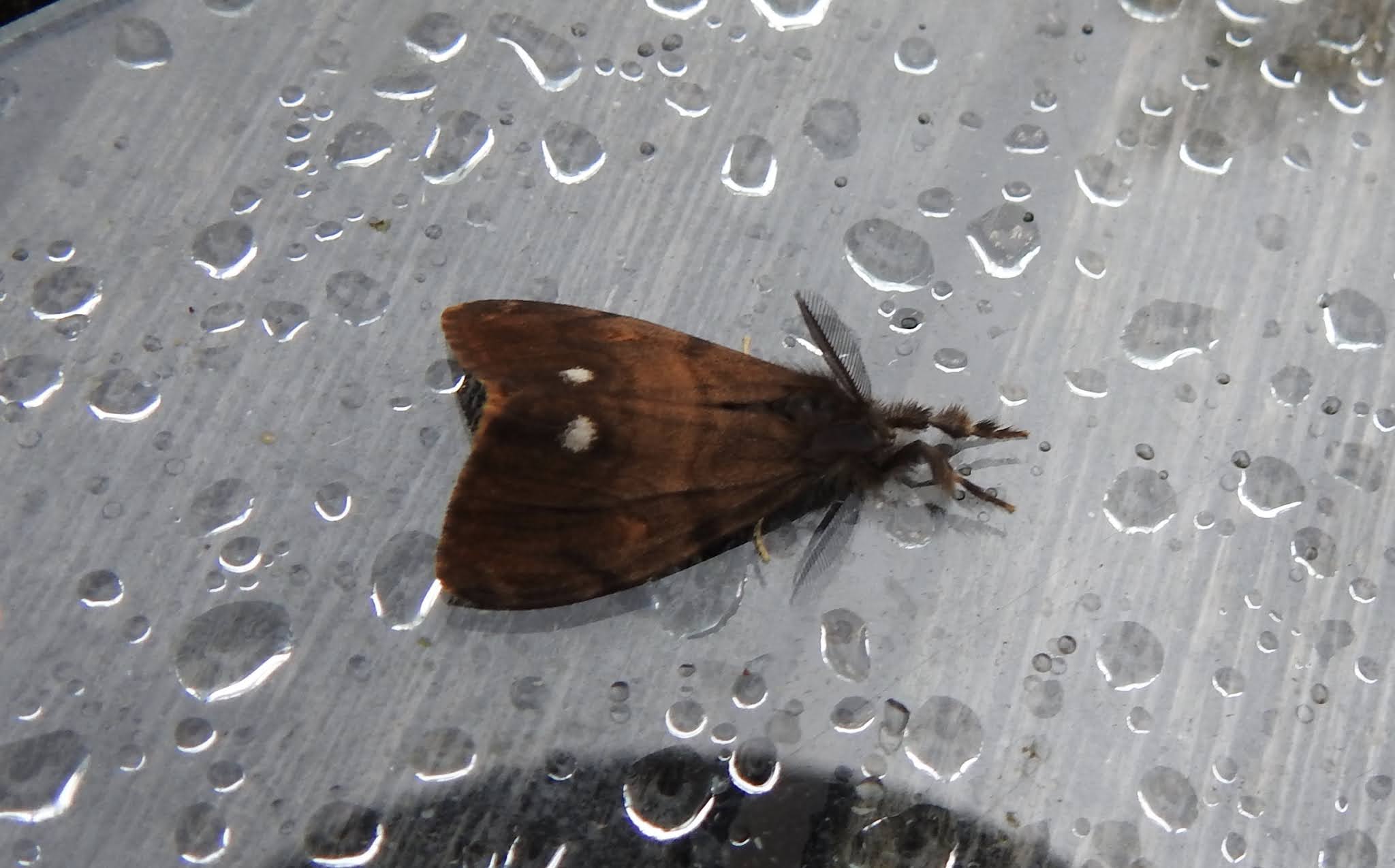
The other notable moth was the Vapourer. It was quite a late one, and also only my second this year.

Vapourer

The light was very poor for photographing the moths this morning, but once the sun came out this afternoon one or two of the above looked ready to leave, so I let them take their chances.

Thursday, 29 October 2020

Thursday October 29 - Lion Wood

 At the risk of sounding like the pessimist I am, I poked my head outside last night and saw clear skies and  the moon. This was not good. It meant that the Red-flanked Bluetail may have also looked up and thought "time to be off".

The fact is that most passerines migrate at night, and they prefer to see stars. It is assumed that the night sky plays some part in navigation, although there are plenty of other cues thought to be used. Whatever it was using, the Bluetail had got it all wrong and had turned up thousands of miles from its intended destination in the Indian subcontinent or even further east.

However, hope springs eternal, and I joined thirty or so of the usual suspects in the wood this morning just after first light for another go.

Someone had brought a secret weapon, and after an hour of standing around near the spot where it was twice seen yesterday, it was deployed. The playing of tapes to attract birds can be frowned upon, and it is not fair on the birds during the breeding season. The chap with the tape was very good, and asked everyone if they had any objection. Of course we didn't.

So the call was played for about 30 seconds. I thought "so that's what they sound like". Further down the track a couple of birders, the Peplows I think, got a bit excited having been unaware of the plan. I was impressed that they knew the call.

The upshot was that nothing happened. Optimism plummeted. The bird must have gone. The next hour was spent chatting, scanning, and eventually wandering about. 

When we started photographing each other (in case we never see each other again, someone said) I knew that pessimism had won the day.

From the left: Graham Mant, John Sirrett, and Mike Inskip

Actually meeting up with old friends is a large part of the attraction of twitching. 

But then a text message arrived at 11.00. It had been found. Three hours later, after chasing false alarm Robins, Nuthatches, and probably leaves, I followed directions (behind the birch) and saw the bird for about two seconds.

A slender pale chat with orange flanks ... er that's it. Good enough for a tick, but I'd like longer views.

So I was tempted to go back again. Finally, at 16.40 it landed in front of the remaining crowd and I could see its blue tail. I took a photo, but in a gloomy wood under grey skies late in the afternoon I had left the setting on "birdwatching". This was a mistake. The resulting shot is so terrible I cannot bring myself to exhibit it here. I realised my mistake, switched to "auto" and took another shot about a second after the bird flew out of frame.

I'm all Blue-tailed out. It'll be back to moths and Morton Bagot for the foreseeable future.


Wednesday, 28 October 2020

Wednesday October 28 - Spernal STW

So here's the plan. It doesn't look as though I'm going to find a Yellow-browed Warbler at Morton Bagot any time soon. Just down the road lies a sewage works, and earlier this year it hosted several wintering Chiffchaffs. This makes it a better bet for other insectivores like Yellow-broweds.

That was the theory. I put it to the test this morning in sunshine and a light south-westerly, and I did find plenty of insectivores, but not the right ones. The site is frustratingly hard to work. A footpath runs along the river Arrow on the opposite bank to the sewage works, and tantalising glimpses of a small pool bordered by reedbed suggests that anyone working for Severn Trent would be getting wonderful views of the resident wildfowl. 

Meanwhile, outside the fence and beyond the river I can see four Teal, two Grey Herons, and hear the squeal of a Water Rail. But all is not lost because I can also see lots of gnats and hear several Goldcrests. What I can't find are any warblers. Eventually I rectified this with a male Blackcap back by the car-park.

The best moments came from pasture grazed by a flock of sheep at the northern perimeter. A flock of Long-tailed Tits filtered through trees bordering the Arrow, and several Grey Wagtails.

Grey Wagtail

to be continued.

I've just heard there's a Red-flanked Bluetail at Lion Wood three miles from my house. I'm off.

DIPPED! 

Where were we? Also present among the sheep were 37 Pied Wagtails, two Meadow Pipits, 23 Siskins, and five Lesser Redpolls.

Meadow Pipit

Pied Wagtail

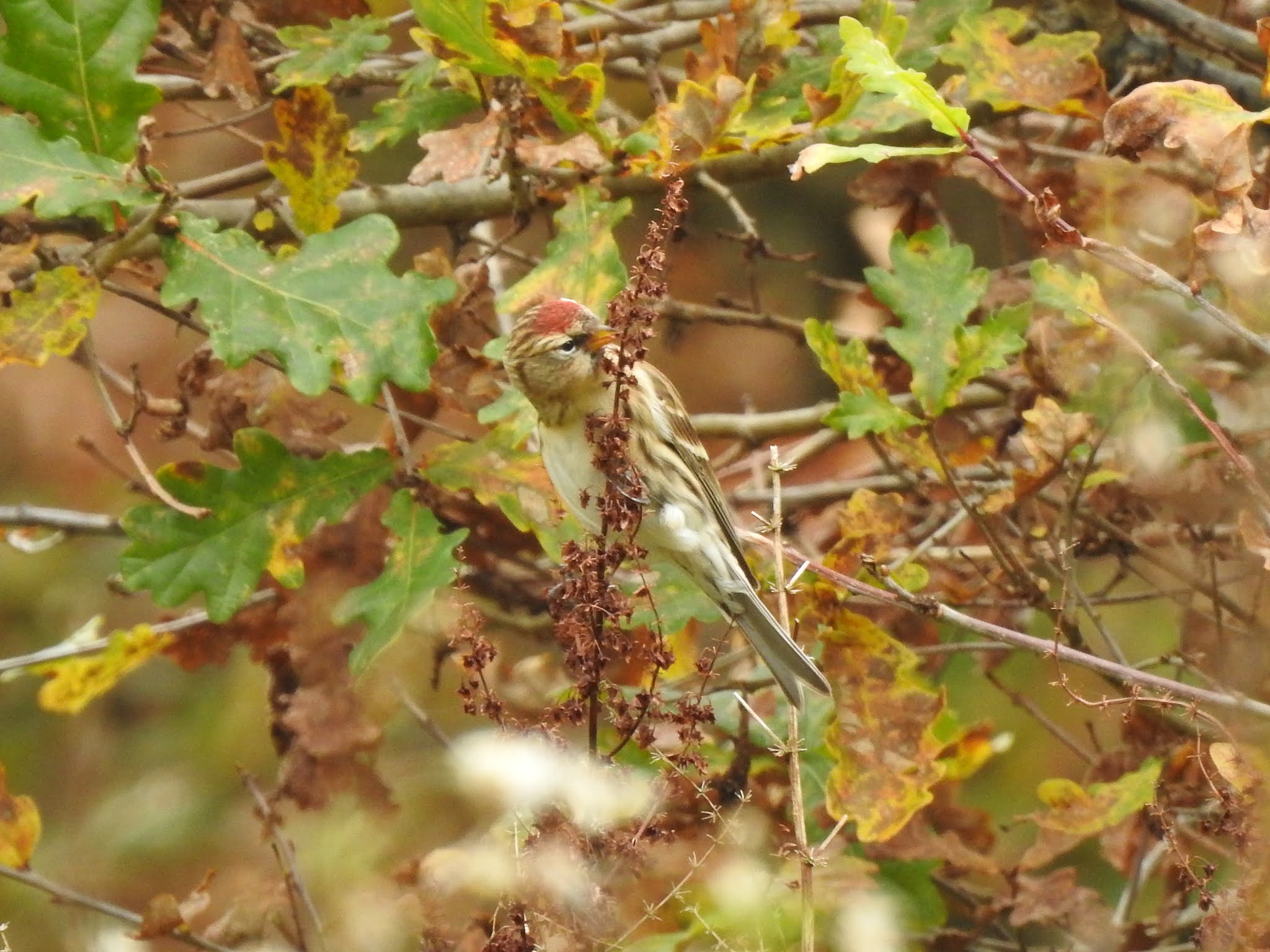
Lesser Redpoll

I spent a while watching birds feeding in the shelter of a hedge within HOEF land, the above Redpoll being one of them. 

Little did I know that a lifer was being ringed and released three miles from my house. I have to admit that missing it was a bit disappointing. 

A flock of Dippers

It was seen twice while I was there by Craig Reed and Rob Clipson, who even photographed it. Everyone else as far as I know was in the wrong place at the wrong time.

Sunday, 25 October 2020

Sunday October 25 - spooky birding

 A morning of sunny intervals and light south-westerlies. Dave is still experiencing car troubles, so couldn't join me. Meanwhile I was still on a mission to find a Yellow-browed Warbler, as numbers continue to grow in the Midlands. Someone even found one outside my old office in the centre of Birmingham. Good grief!

I began by checking whether the ringers were here. They weren't, but their favoured area hosted quite a few Redwings and Chaffinches

A female Chaffinch

I've put the above shot in because it was just about the only bird today which wasn't spooked. Certainly the Redwings were hard to see well. I decided to walk along the road towards Bannam's Wood on my Yellow-browed hunt. 

A spooked Redwing

As I approached the wood all hell broke out. Jackdaws scattered in panic. Accipiter at large?

Jackdaws in a tizz

Some years ago we had a Goshawk for a few weeks, and its presence always created this kind of panic. So I was expecting that an Accipiter of some kind will have caused this strife. Sure enough a Sparrowhawk appeared. It was quite a big one as they go, but not all that much bigger than the Jackdaws. I took a couple of shots.

Accipiter with mobbing Jackdaw

Just in case you are thinking, as I did when looking at the shot in the back of the camera, looks a bit long-necked, a bit short-tailed, I am showing the second image, horribly blurred though it is.

Same Accipiter

Now the bird looks long tailed, but also the tail tip looks a bit rounded. Just a Sparrowhawk, I think. I don't mind big accipiters or small accipiters, or close accipiters, but I bloody hate the biggish, distant ones.

No Yellow-broweds called, and the only 'crests I saw were Goldcrests. I headed down towards the pool. A couple of dog-walkers appeared. As I approached the pool, more spooked birds appeared. A flock of 10 Shovelers were circling around. A little while later 12 Teal were up. I couldn't see what was causing their anxiety, the dog-walkers had long gone. By the time I reached the flash field it was deserted.

It looked as though my day was done, but it certainly wasn't. Along with the usual 120 strong Goldfinch flock, and quite a few Skylarks and Stonechats, I noticed that the weedy field contained a flock of 60 Linnets. This was a big increase, and I was persuaded it might be worth venturing in. 

I had got about half way to the brow of the hill when I almost stood on a Quail. It flushed a few inches from my foot as Jack Snipes do, but as it flew low away from me like a Skylark sized Partridge I knew immediately it was a Quail, and that I wouldn't be seeing it again. 

Obviously I tried. I rang for reinforcements, and was joined by Mike Inskip. We walked a couple of lengths near where it had disappeared from view, but it was all to no avail. All I can show you are the notes I made at the time.

Old-fashioned birding notes

Although this was the 23rd Quail I have recorded in the UK, and isn't even a patch tick, its still only the fourth I have ever actually seen. The other 19 were all spring singers, "wet my lips" as the song is described. Interestingly this one did make a noise as I spooked it, a slightly wader-like "plup-up" is what I wrote.

Who needs Yellow-browed Warblers?

Thursday, 22 October 2020

Thursday October 22

 Todays visit couldn't have been more different from the previous one. The sun shone from the off, and there was a moderate south-westerly breeze. Gone were the hoards of thrushes and Starlings which filled the sky last time. A slow, carefully paced mooch was called for today.

Actually, some of the thrushes had remained, but they were now hiding in the hedgerows, guzzling berries. I flushed about 40 Redwings, 10 Fieldfares, and similar numbers of Song Thrushes and Blackbirds but few gave any opportunity for a good look.

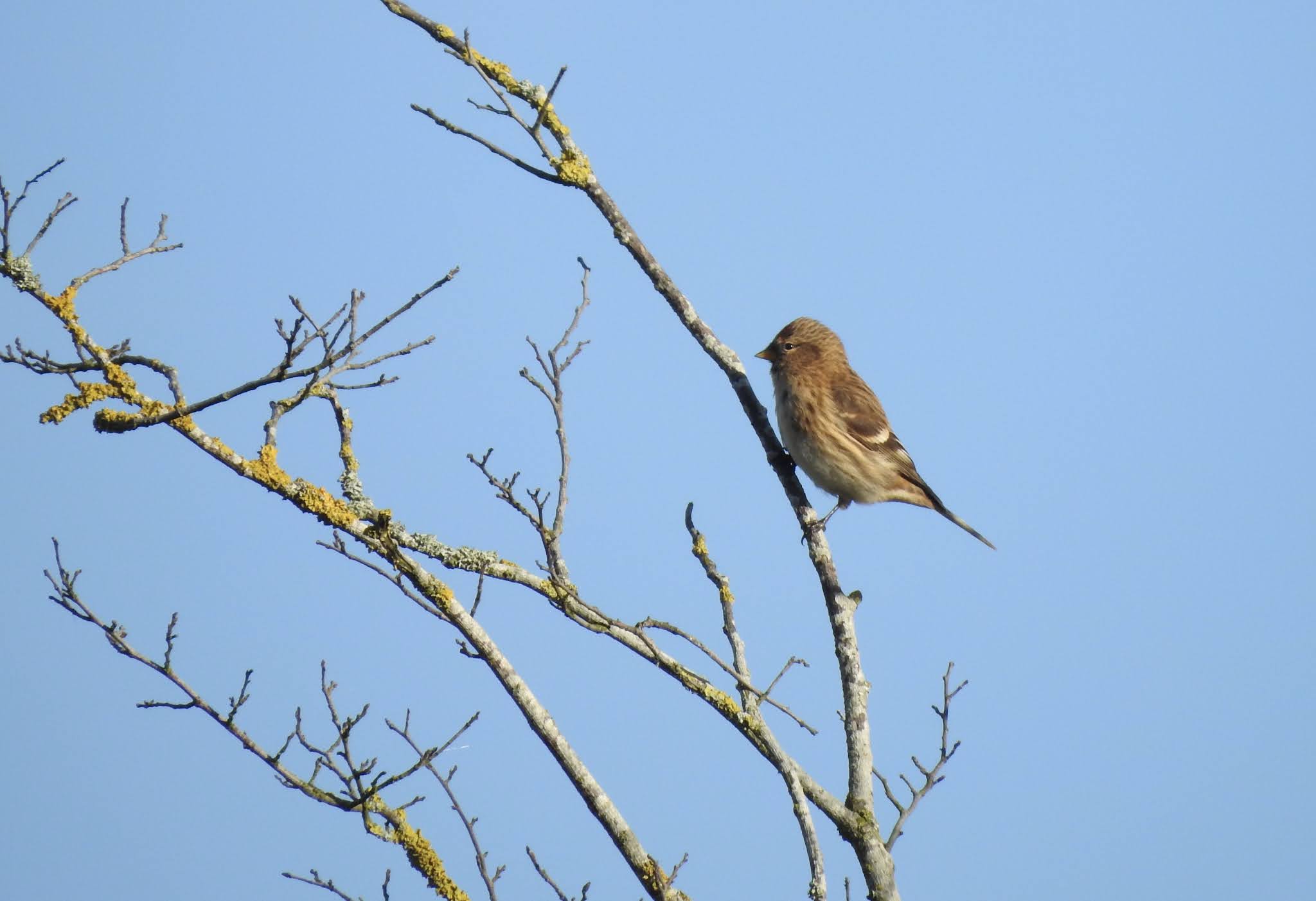
Some birds were more obliging. There were a lot fewer Lesser Redpolls around, but one or two did pose quite well.

Lesser Redpoll

My target species, I always have something in mind, was Yellow-browed Warbler. Since my last post, another one has been winkled out of a West Midlands site, a Common in Coventry. So I listened for one, and grilled anything warbler-like. In the end I could find only Chiffchaffs, two to be precise.

Chiffchaff

The Goldfinch flock is still 150 strong, and I counted three Stonechats. Both Grey Wagtail and Yellowhammer flew over during the morning.

The flash field contained no Mallards, which is quite extraordinary, but did host 10 Teal, and 13 Shovelers.

Some of the Shovelers

So it was a pretty quiet visit, as most of them are. It's the bread and butter which makes you appreciate the jam when it arrives.

Sunday, 18 October 2020

Sunday 18 October - What are we missing?

I don't know what to say about today. Perhaps that it was in equal measure exhilarating and frustrating. Let me explain.

The east coast of the UK is currently dripping in rarities, I even saw one of them, a Rufous Bushchat, on the Breakfast News this morning. Although it would be unrealistic to hope for anything of that calibre, I was optimistic. For about ten seconds so was Dave. Then he noticed the smoke drifting out of the rear wheel arch of his car.

While we waited for the AA it seemed appropriate to wander along the track to the road and see what we could see. There was nothing too surprising, a few Lesser Redpolls and Redwings flew over, a Marsh Tit or two flitted down the hedge, and a Treecreeper landed not too far away.

Treecreeper

Assistance arrived, and I left Dave to his plight, choosing instead to see if any ringers were present. Sure enough they were beavering away. The song of a Firecrest reached my ears while, simultaneously, my eyes took in the tape machine by the mist-net. Clearly Tony and Leigh were also thinking big. They had a Yellow-browed Warbler tape playing too. With the latter species having been found at Grimley, Earlswood, and the centre of Worcester recently, it was definitely worth a go. They were doing alright, lots of captures and three controls, but nothing rare. The controls were of a Lesser Redpoll they had caught here in January 2020, and another one from elsewhere. They still haven't had the results of a previous control, and I understand it depends on the frequency with which other ringers file their reports.

Dave rejoined me with news that his car was undriveable and would be towed away. However, by now it was clear that thrushes were arriving in numbers, so we decided to crack on.

The weather was gloomy, but we weren't. The only problem was estimating how many birds we were seeing as wave after wave of Redwings/Song Thrushes and Fieldfares either flew over, or pitched into the treetops only their calls giving them away. An extremely conservative guesstimate would be 490 Redwings and 60 Fieldfares, while the frequent "tic" calls of Song Thrushes from the bushes indicated that many of them were also present. Add to the mix over 100 Goldfinches, heaps of Lesser Redpolls, and regular Meadow Pipits, Skylarks and various finches. It was all a bit overwhelming.

At one point Dave looked beyond a party of about 200 thrushes and spotted 90 fast flying Golden Plovers heading south. They were extremely distant, but we were happy to name them.

What were we missing? Pretty much all of the birds mentioned so far were seen as little grey blobs against the grey sky, identified only by call. A few allowed views which confirmed what we thought, but the vast majority didn't.

Fieldfare

Redwing

The above photos were the best I could manage in all this avian turmoil. Admittedly the seven Stonechats we logged all posed quite well, but enough of those get shown on this blog.

Days like this are not unusual at the end of October. In another month the leaves will have blown off the trees and the excitement levels will have returned to normal. We'll be left to wonder whether, if we'd been a bit sharper, a bit less deaf, a bit more keen sighted, we might have picked out the biggy from the swirl of passing mediocrity.

One day, maybe.

Ringing update

Tony and Leigh targeted mainly Meadow Pipits and Redwings on Friday and caught 20 birds. This morning Tony, Leigh, and Kate used feeders and tapes and caught a total of 159 birds including a Lesser Redpoll which had been ringed elsewhere.

Their combined figures (retraps in brackets) are as follows:

Great Spotted Woodpecker 1, Blue Tit 57 (17), Great Tit 11 (6), Long-tailed Tit 1, Goldcrest 4 (2), Wren 8 (2), Redwing 9, Robin 2 (1), Dunnock 1, Meadow Pipit 13, Greenfinch 14, Lesser Redpoll 46 (1), Goldfinch 12.

Although I am a layman in ringing terms, I am struck by the fact that the retraps are prevalent among the resident species as you might expect. This could imply that while the Goldcrests caught might be local birds (a small sample admittedly), migrants like Redwings, Meadow Pipits, and Lesser Redpolls are rarely retrapped. So perhaps the 14 Greenfinches, and 12 Goldfinches were not locals.

Saturday, 17 October 2020

The moths are back.

After a total blank last weekend, I actually caught some moths last night. Only six of them, but clearly the slightly warmer night was enough to encourage them onto the wing.

The highlight was my first Merveille du Jour since 2018. 

Merveille du Jour

A very pretty moth and well named for a change. It is indeed a marvel of the day (apologies for any mistranslation).

The second new one for the year was a Barred Sallow, also no slouch in looks.

Barred Sallow

For the record, the others were Common Marbled Carpet, Shuttle-shaped Dart, Light Brown Apple Moth, and Ruddy Streak.